



Infrared Roof Inspection in Carlsbad, NM
Protect your property with our infrared roof inspections in Carlsbad. Detect hidden leaks and moisture with precision. Schedule your thermal assessment today.
Protect Your Home with Certified Infrared Roof Inspections
Worried about potential roof damage after the last storm season? Ensure your roof’s integrity with our advanced infrared inspections before minor leaks turn into structural failures. Call us immediately or contact us online to schedule your thermal assessment in Carlsbad today.
Water intrusion is rarely visible to the naked eye until it has already caused significant damage to insulation, decking, or interior ceilings. By the time a stain appears on your drywall, the moisture has often been trapped within the roofing system for weeks or months. Our team at Design Roof Services LLC utilizes state-of-the-art thermal imaging technology to detect these hidden issues non-destructively. This scientific approach allows you to make informed decisions about maintenance without unnecessary guesswork or premature replacement costs.
- Identify hidden moisture and leaks before they escalate.
- Receive a comprehensive report the same day.
- Expert, certified inspectors at your service.
- Fully licensed and insured for your peace of mind.
Immediate Insight: What Our Infrared Inspection Reveals
When you suspect a leak or simply need to verify the condition of your roof, a visual inspection often falls short. Surface-level checks cannot see beneath the membrane of a flat or low-slope roof. Our infrared inspection provides an immediate, in-depth look at what is happening beneath the surface layers of your roofing system. This service is designed to give you actionable data, allowing you to address specific problem areas rather than paying for blanket repairs that may not be necessary.
Thermal imaging works by detecting temperature differences. During the day, the sun heats your roof. After the sun sets, the roof begins to cool. Dry insulation cools down relatively quickly, but wet insulation retains heat much longer due to its higher thermal mass. Our specialized cameras detect this residual heat, creating a thermal map that clearly delineates dry areas from wet areas.
When you book this service, you receive a detailed breakdown of your roof's health. This includes:
- Thermal Images: High-resolution pictures showing the heat signatures of your roof. Darker areas typically indicate cooler, dry sections, while brighter areas reveal trapped heat and moisture.
- Visual References: Standard daylight photos of the same areas to provide context for the thermal anomalies.
- Moisture Mapping: A clear outline of exactly where water has infiltrated the insulation or substrate.
- Deficiency Identification: Pinpointing specific failure points such as compromised flashing, punctures in the membrane, or poor drainage areas.
- Actionable Recommendations: A summary of findings that helps you decide whether a simple patch, a section repair, or a larger rehabilitation is required.
This process is critical for commercial buildings and residential properties with flat roofing systems. It eliminates the need for destructive testing, such as cutting core samples blindly, and ensures that every dollar you spend on repairs is targeted exactly where it is needed.
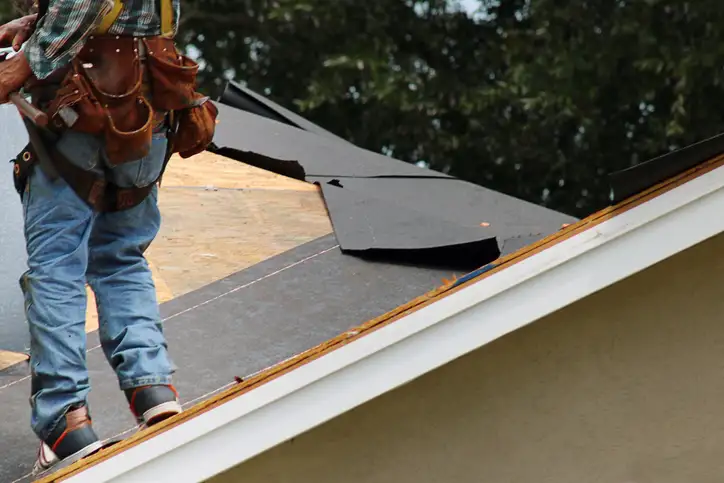
The Thermography Process: How We Scan Your Roof
Understanding how the inspection is conducted helps property owners prepare for the assessment. The process is rigorous and requires specific environmental conditions to ensure accuracy. We do not simply walk the roof with a camera; we follow a strict protocol to ensure the data we collect is valid and reliable for insurance claims or repair planning.
The execution of a proper infrared scan involves several distinct stages:
- Site Preparation and Conditioning: The roof surface must be dry and free of standing water or heavy debris. Moisture on the surface can reflect temperature and skew results. We verify that the roof has received adequate solar loading during the day, meaning it has absorbed enough heat from the sun to create the necessary thermal contrast later.
- Timing the Inspection: The scan typically occurs after sunset. This is the "thermal window" where the temperature difference between wet and dry insulation is most distinct. Scanning too early or too late can result in missed anomalies.
- Grid Scanning: Our inspectors walk the roof in a systematic grid pattern. This ensures 100% coverage of the roof area. We do not spot-check; we scan the entire designated surface to capture a complete thermal profile.
- Identifying Anomalies: As the camera detects heat signatures, the inspector marks these areas. Not all "hot spots" are leaks; heat vents, exhaust fans, and structural components also retain heat. An experienced thermographer distinguishes between mechanical heat and moisture retention.
- Verification: Once a thermal anomaly is identified, we use secondary methods to confirm the presence of moisture. This often involves using a non-penetrating moisture meter or taking a small, repairable core sample to physically verify the saturation of the insulation. This step is crucial for eliminating false positives.
- Marking the Roof: We physically mark the boundaries of the wet areas directly on the roof surface using specialized paint or crayon. This allows repair crews to see exactly where the damaged insulation needs to be removed without measuring from a report.
- Report Generation: Finally, the data is compiled into a formal report. This document links the thermal images with the physical findings, providing a legal record of the roof’s condition.
Deciding Between Targeted Repairs and Full Replacement
One of the primary financial benefits of an infrared inspection is its ability to save capital. Many building owners in Carlsbad assume that a leaking roof requires a total tear-off and replacement. However, if the moisture is confined to specific areas, a full replacement is often a waste of resources. The data provided by Design Roof Services LLC empowers you to make a logical, math-based decision regarding the future of your roofing asset.
The decision to repair or replace generally hinges on the percentage of moisture saturation found during the scan.
- When to Choose Targeted Repairs: If the infrared scan reveals that less than 20% to 25% of the roof’s insulation is wet, restoration is usually the most cost-effective path. In this scenario, contractors can surgically remove the wet insulation and membrane in the marked areas, replace it with dry material, and then apply a restorative coating over the entire roof. This extends the life of the roof by years or even decades at a fraction of the cost of a new roof. The infrared report serves as the roadmap for these surgical repairs.
- When Replacement is Necessary: If the thermal imaging shows widespread moisture intrusion, typically exceeding 30% of the total roof area, the structural integrity of the decking may be compromised. At this level of saturation, the cost of chasing leaks and patching large sections approaches the cost of a new roof. Furthermore, widespread moisture can rot steel or wood decking, posing a safety hazard. In these cases, the infrared report provides the justification needed to approve a capital expenditure for replacement, proving that the system has reached the end of its serviceable life.
- Insurance and Warranty Leverage: An infrared report is a powerful tool when dealing with insurance claims. If a storm has caused damage, an insurance adjuster may only see surface issues. A thermal scan provides indisputable proof of water intrusion that warrants a more comprehensive claim. Similarly, if you recently had a roof installed and it is leaking, this report validates warranty claims against workmanship or material defects.
Carlsbad Climate Factors and Inspection Timing
The local environment plays a significant role in the health of your roofing system. In this region, roofs are subjected to intense thermal cycling. The high daytime temperatures in the summer cause roofing membranes to expand, while cooler nights cause them to contract. Over time, this movement creates stress on seams and flashings, leading to openings where water can enter.
The monsoon season, typically occurring in late summer, brings rapid, heavy rainfall. This is often the critical period for roof failures. While the desert climate is generally dry, these concentrated bursts of rain test the limits of your drainage systems and waterproofing:
- Post-Monsoon Assessment: The ideal time to schedule an infrared inspection is immediately following the rainy season. This ensures that any water that has breached the system is fresh and easily detectable before it causes rot or mold growth.
- Annual Maintenance: Due to the UV intensity in New Mexico, roofing materials degrade faster than in cloudier climates. An annual thermal scan helps track the degradation of the membrane and catches seal failures early.
- Permitting and Codes: If the inspection reveals the need for significant repairs, local building codes in Carlsbad and New Mexico Construction Industries Division regulations must be followed. Understanding the extent of the damage via infrared helps in securing the correct permits. For instance, if a repair exceeds a certain square footage, code may require a full roof upgrade to current insulation standards. Knowing the exact scope beforehand prevents permitting delays.
Why Precision Matters in Leak Detection
Relying on guesswork for roof repairs is a strategy that leads to recurring leaks and wasted budget. Traditional "flood testing", where water is sprayed on the roof to see where it comes through, is messy, often inconclusive, and can cause further damage. Destructive testing, where contractors cut random holes to check for wet insulation, creates new potential leak points and offers only a fragmented view of the roof's condition.
Infrared thermography offers a precision alternative that changes how you manage your facility:
- Non-Destructive: The integrity of your roof membrane remains intact during the inspection. There is no cutting, drilling, or peeling back of layers required to see the problem.
- Speed and Efficiency: Large roof areas can be scanned in a single evening. You get a complete picture of thousands of square feet of roofing quickly, allowing for rapid decision-making.
- Sustainability: By identifying and replacing only wet insulation, you reduce the amount of waste sent to landfills. You are effectively recycling the dry, functional parts of your roof rather than discarding the entire system.
- Validation of Repairs: Thermography is not just for finding leaks; it is also for verifying repairs. After a contractor has fixed a section, a follow-up scan can confirm that the new seal is watertight and that no moisture remains.
Our team brings certified expertise to every scan. Interpreting thermal images requires training; a shadow from a parapet wall or a reflection from an HVAC unit can look like a leak to an untrained eye. We ensure that the data you receive is accurate, vetted, and ready for use in maintenance planning or legal documentation.
Secure Your Roof’s Future Today
Waiting for a visible drip in your ceiling means the damage has already been done. Proactive detection is the only way to minimize repair costs and extend the lifespan of your current roofing system. Whether you are managing a commercial facility or protecting your home, accurate data is your most valuable asset.
Don't let hidden moisture compromise your investment. Contact Design Roof Services LLC today to schedule your comprehensive infrared roof inspection and get the clarity you need to proceed with confidence.

Customer Testimonials
Go With Experience