



Commercial Roof Inspection in Artesia, NM
Protect your Artesia commercial property with our expert roof inspections. Schedule a tailored assessment today to prevent future damage and costs.
Is Your Commercial Roof Ready for Artesia's Harsh Weather?
Dealing with frequent roof leaks or cumulative storm damage in Artesia requires immediate attention before minor issues escalate into capital expenditures. Ensure your property’s durability and protect your inventory with our expert commercial roof inspections. Contact us today to schedule a comprehensive assessment. Design Roof Services LLC delivers the precise data and technical analysis property managers need to maintain operational continuity.
- Identify potential risks early with our thorough inspection process.
- Extend your roof’s lifespan with tailored maintenance suggestions.
- Rapid response and detailed reporting to facilitate immediate actions.
All inspections are performed by licensed professionals with full compliance to local building codes.
Comprehensive Evaluation of Your Roofing System
When you commission a commercial roof inspection, you are securing a detailed audit of your building's first line of defense. The objective is not merely to find active leaks but to identify the subtle signs of degradation that precede failure. In the high-altitude desert climate of Artesia, roofing systems are subjected to unique stressors, including intense UV radiation and rapid thermal cycling. A professional inspection goes beyond a surface-level glance; it involves a forensic approach to understanding the integrity of the entire assembly.
Our assessment covers every square foot of the roof surface. We examine the condition of the field membrane for signs of blistering, cracking, or crazing, which are common indicators of advanced aging. For single-ply systems like TPO or EPDM, we verify seam integrity to ensure that wind uplift pressures haven't compromised the bonds. For built-up roofing (BUR) or modified bitumen, we check for granular loss and alligatoring that can leave the underlying substrate vulnerable to moisture infiltration.
The inspection also scrutinizes all penetration points. HVAC curbs, vent stacks, and skylights are statistically the most likely points of failure on a commercial roof. We verify that flashings are properly adhered and that sealant is pliable and intact. We also evaluate the perimeter details, including parapet walls and coping caps, ensuring they are securely fastened to withstand the high winds often experienced in New Mexico.
Drainage efficiency is another critical component of our evaluation. Standing water, or "ponding," can act as a magnifying glass for the sun’s rays, accelerating membrane deterioration and adding immense structural weight. We verify that drains, scuppers, and gutters are free of debris and that the roof slope is sufficient to evacuate water effectively after the heavy downpours typical of the region's monsoon season.
Our Commercial Roof Inspection Process
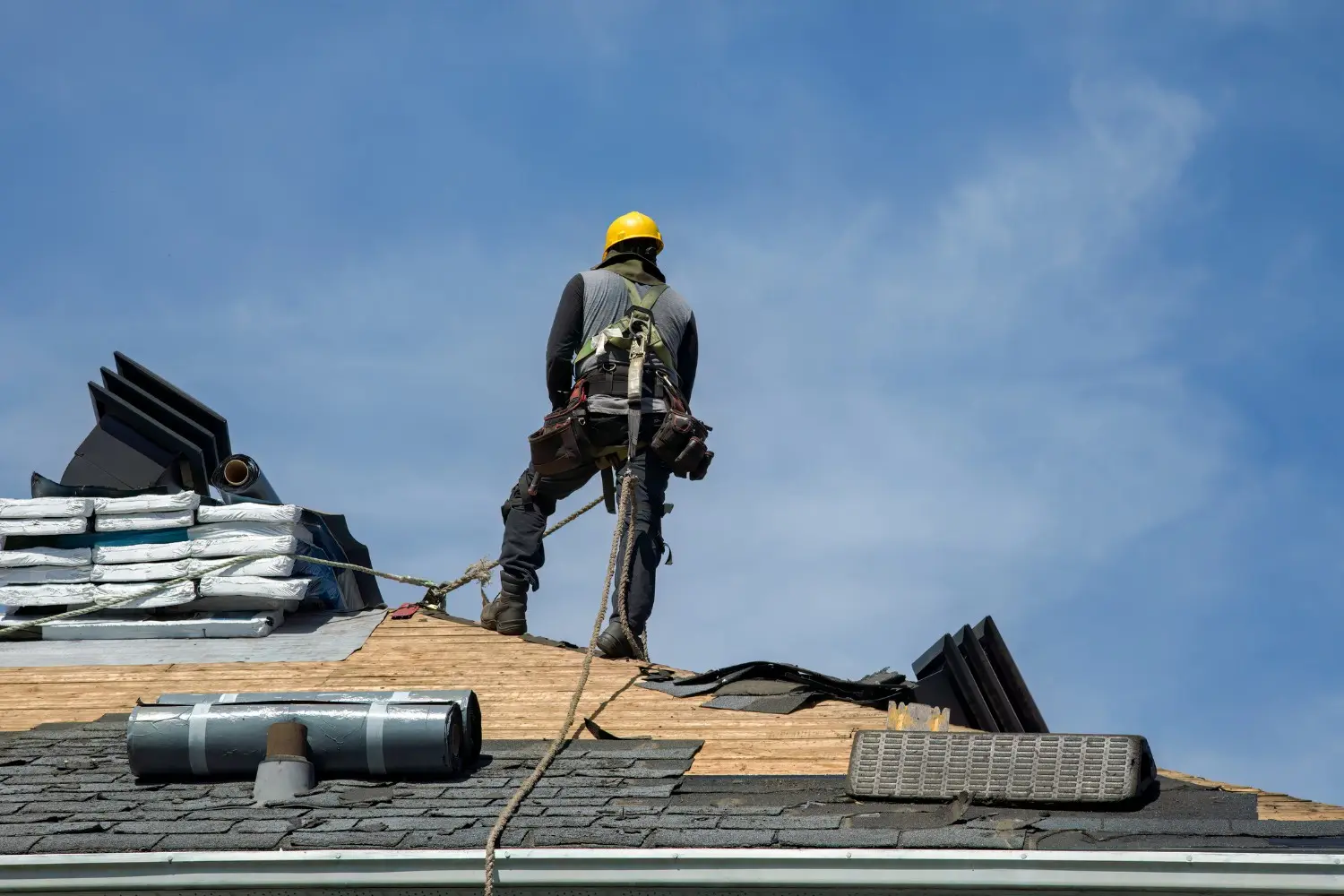
We utilize a systematic approach to roof inspections to ensure consistency, accuracy, and comprehensive data collection. This structured workflow allows us to provide you with actionable intelligence regarding your asset.
- Initial Consultation and History Review: The process begins with reviewing the history of the roof. We discuss the age of the current system, past repairs, and any specific leak locations reported by building occupants. Understanding the historical context helps us pinpoint chronic issues and differentiate between installation errors and wear-and-tear.
- Perimeter and Access Safety Check: Before ascending, we evaluate the building perimeter and access points. This includes checking internal hatches or external ladders for safety compliance. We also look for signs of external structural movement or wall staining that might indicate water traveling from the roof down the façade.
- Grid-Based Field Analysis: Once on the roof, we conduct a systematic walkthrough. We divide the roof into sections to ensure no area is overlooked. We traverse the field membrane, inspecting for physical damage, punctures, or environmental wear. During this stage, we also take core samples if necessary to determine the makeup of the underlying insulation and deck condition, ensuring there is no trapped moisture beneath the surface.
- Flashings and Penetration Audit: We meticulously check every vertical surface. This involves testing the sealants around pipes, checking the termination bars on parapet walls, and inspecting the pitch pans for shrinkage. If pitch pans are not properly filled, they become direct conduits for water entry.
- Drainage System Verification: We inspect the primary and secondary drainage systems. This includes clearing minor debris to inspect the clamping rings on internal drains and checking scuppers to ensure they are properly sealed to the wall. We look for water lines or mineral deposits that indicate how long water sits on the roof after a storm.
- Report Generation and Review; Following the physical inspection, we compile a detailed report. This document includes high-resolution photographs of all defects, a graded assessment of the roof’s condition, and a prioritized list of recommended actions. We categorize findings by urgency, distinguishing between safety hazards that need immediate attention and maintenance items that can be budgeted for the future.
Determining When to Repair or Replace Your Commercial Roof
Making the financial decision between repairing a section of your roof or authorizing a full replacement is one of the most significant choices a facility manager faces. This decision relies on accurate data regarding the remaining service life of the system and the cost-effectiveness of continued repairs. Design Roof Services LLC helps you navigate this complex equation with objective criteria.
Indicators for Repair and Restoration
Repair is often the preferred path when the roof system is in generally good condition but has suffered localized damage. If the membrane is still flexible and the insulation is dry, targeted repairs can effectively stop leaks and extend the asset's life.
- Minimal Moisture Saturation: If moisture scans reveal that less than 20% of the insulation is wet, it is usually more cost-effective to cut out the wet areas, replace the insulation, and patch the membrane.
- Recent Installation: If the roof is relatively new and issues are due to workmanship errors or storm damage, repairs are the logical step to preserve the warranty.
- Surface-Level Issues: Problems related to penetrations, flashings, or minor punctures are typically good candidates for repair. Fluid-applied restoration coatings can also be an option to renew the surface without a full tear-off.
Indicators for Full Replacement
There is a tipping point where throwing money at repairs becomes a diminishing return. Replacement becomes necessary when the system can no longer function as a waterproof barrier.
- Extensive Insulation Damage: If moisture has permeated more than 25-30% of the insulation, the structural integrity of the roof deck may be at risk. Trapped moisture destroys R-value (energy efficiency) and corrodes steel or rots wood decks.
- Membrane Failure: When the roof membrane becomes brittle, cracks extensively, or shows signs of widespread delamination, repairs will not hold. This is often seen in older TPO or PVC roofs where the plasticizers have migrated out of the material.
- Recurring Leaks: If you are chasing leaks in the same areas despite previous repairs, or if leaks are appearing randomly across the entire field, the system has likely reached the end of its useful life.
- Energy Efficiency Goals: Older roofs often lack modern insulation standards. Replacing the roof offers an opportunity to increase insulation thickness, significantly reducing heating and cooling costs for the facility.
Regional Factors Impacting Commercial Roofing in New Mexico
Operating a commercial facility in Artesia presents specific challenges that dictate how roofs must be inspected and maintained. The local climate is characterized by significant temperature fluctuations and intense weather events that accelerate roofing wear.
- Thermal Shock and Expansion: Artesia experiences hot summers with highs often exceeding 90°F, followed by cooler nights. This rapid temperature change causes roofing materials to expand and contract daily. Over time, this thermal movement puts immense stress on seams and flashings. Metal counter-flashings can pull away from walls, and membrane seams can shear if not properly reinforced. Our inspections focus heavily on these stress points to prevent separation.
- Monsoon Season Preparedness: The region receives the majority of its 16-20 inches of annual rainfall during the summer monsoon season. These storms often bring high-volume rainfall in short bursts. If a commercial roof has inadequate drainage or blocked scuppers, the weight of the water can exceed the structural load capacity. Pre-monsoon inspections are critical to ensure that drainage pathways are clear and that the roof can handle sudden deluges.
- Wind Uplift and Debris: Spring in Southern New Mexico is notoriously windy. High winds create negative pressure over the roof, attempting to lift the membrane. We inspect the edge metal and coping caps to ensure they meet ANSI/SPRI ES-1 wind design standards. Loose metal edges are often the first component to fail, peeling back the membrane and exposing the building interior.
- Regulatory Compliance and Permitting; Commercial roofing in Artesia is subject to New Mexico Construction Industries Division (CID) codes and local municipal regulations. Whether it involves a simple repair or a re-roofing project, adherence to code regarding insulation values and fire ratings is mandatory. We ensure that our inspection recommendations align with current code requirements, helping you avoid compliance issues or fines during future renovations.
Why Property Managers Choose Professional Inspections
Relying on in-house maintenance staff for roof inspections often leads to missed diagnosis. A facility manager might see a puddle on the floor, but a professional inspector traces the water intrusion path, which often originates far from the visible leak. Professional inspections provide the documentation necessary for insurance claims, asset valuation, and capital planning.
- Objective Asset Assessment: We provide an unbiased view of the roof’s condition, independent of sales pressure.
- Safety and Liability: Walking on a commercial roof involves significant risk. Licensed inspectors are trained in fall protection and OSHA standards, removing the liability from your internal team.
- Insurance Documentation: In the event of storm damage, having a pre-storm inspection report proves the condition of the roof prior to the event, streamlining the claims process and preventing adjusters from dismissing damage as "pre-existing wear."
Protect your commercial investment with proactive management. A neglected roof is a liability; a maintained roof is an asset. Contact us today to secure a professional evaluation and ensure your facility remains watertight and compliant.
Detailed Inspection Services Built For Accuracy
Professional commercial roof inspection in Artesia, NM, gives your facility reliable data to guide repairs, planning, and compliance. Design Roof Services LLC performs thorough inspections using certified standards and proven methods to assess every key component. We provide photo documentation, condition grading, and actionable recommendations. Our team helps you avoid surprises through clear and timely evaluations. Keep your roofing system protected with expert oversight.
Evaluate Roofing Conditions With Confidence And Clarity

Customer Testimonials
Go With Experience