



Roof Restoration System in Artesia, NM
Seek expert roof restoration services in Artesia to tackle leaks and damage effectively. Schedule an assessment today and explore financing options for cost-effective solutions.
Quick Help for Leaky and Damaged Roofs
Facing sudden roof damage or wear from Artesia's climate? Timely, reliable restoration is just a call away, so contact Design Roof Services LLC now to schedule an inspection or discuss financing options. You do not always need a full replacement to secure your building; a restoration system can extend the life of your existing roof significantly.
- Get same-day service assessments to prevent further damage.
- Professional solutions tailored to Artesia’s climate conditions.
- Flexible financing available to ease unexpected restoration costs.
Backed by guaranteed workmanship, fully licensed, ensuring compliance with local building codes.
Restoring Your Roof Integrity Without a Total Tear-Off
Roof restoration is a strategic alternative to complete roof replacement, specifically designed for commercial and industrial buildings with flat or low-slope roofs. In the Artesia area, where intense UV radiation and thermal shock can degrade roofing membranes prematurely, restoration offers a way to renew the watertight seal without the expense, noise, and landfill waste associated with tearing off an old roof.
When you choose a restoration system, you are essentially installing a seamless, fluid-applied membrane over your existing substrate. This process is distinct from simple patch repairs. While a patch fixes a specific leak, a restoration system encapsulates the entire roof surface. This creates a monolithic barrier that addresses not only current leaks but also micro-cracks and worn seams that are likely to fail in the near future.
Design Roof Services LLC utilizes high-performance coatings, such as silicone or acrylic, which are engineered to withstand extreme temperature fluctuations. These systems are applied as a liquid and cure to form a tough, rubber-like skin. This new surface is fully adhered to the roof deck, meaning water cannot travel laterally beneath the membrane even if the surface is punctured. This characteristic makes leak detection and future repairs significantly easier and less invasive.
The scope of a restoration project typically includes:
- Detailed Diagnostics: Infrared moisture scans to identify wet insulation.
- Surface Preparation: rigorous cleaning and priming to ensure adhesion.
- Detailing: Reinforcing penetrations, flashings, and seams.
- Application: Installing the base and top coats of the restoration fluid.
- Warranty Issuance: Providing manufacturer-backed guarantees on materials and labor.
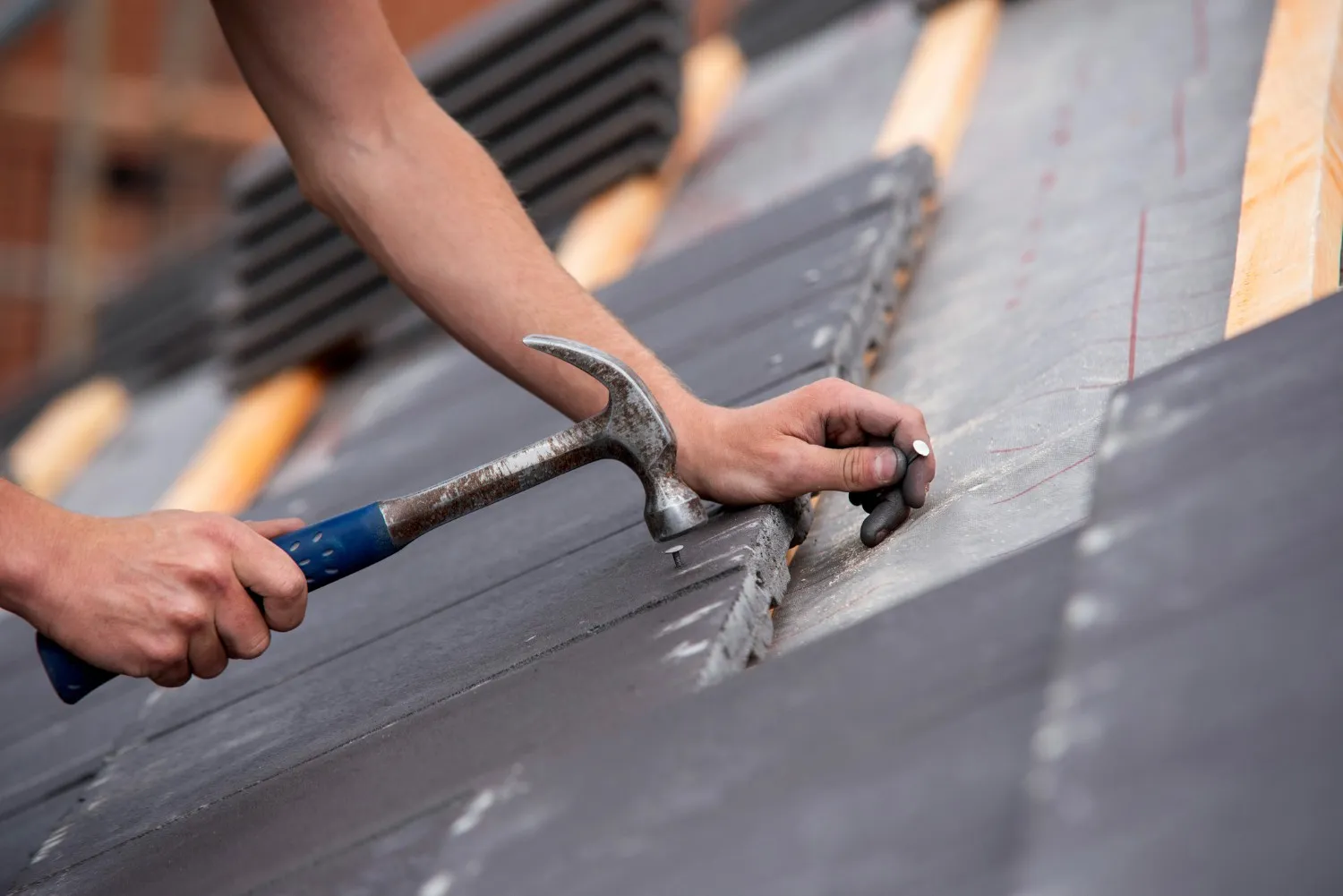
The Restoration Process Step-by-Step
Understanding the execution of a roof restoration system helps building owners prepare for the project. Unlike a replacement, which turns a job site into a construction zone with dumpsters and heavy debris, restoration is low-impact. Business operations usually continue uninterrupted inside the building while the work is performed overhead.
- Initial Inspection and Moisture Survey: The process begins with a thorough evaluation of the existing roof assembly. Technicians verify the number of existing roof layers and the condition of the deck. Crucially, a moisture survey, often using infrared thermography, is conducted to map out any areas where water has saturated the underlying insulation. Restoration fluids cannot be applied over wet insulation, as trapped moisture will vaporize in the heat and cause the new coating to blister.
- Substrate Preparation and Cleaning: Once wet areas are identified and marked for localized repair, the entire roof surface undergoes aggressive cleaning. Dirt, dust, moss, and oxidation must be removed to guarantee a chemical bond between the coating and the roof. High-pressure washing, often with specialized detergents, is used to scrub the membrane. In Artesia, where dust accumulation is common, this step is vital. The roof is then allowed to dry completely.
- Priming the Surface: Depending on the existing material, whether it is TPO, EPDM, Modified Bitumen, or Metal, a specific primer may be required. The primer acts as a bonding agent. It also helps to block asphalt bleed-through on bitumen roofs, ensuring the white reflective coating stays white and retains its energy-efficiency ratings.
- Seam and Penetration Reinforcement: Before the main coating is applied, the "details" are addressed. These are the most vulnerable points of any roof: seams, flashings, screws on metal roofs, HVAC curbs, and drains. A thick, mastic-grade sealant or a combination of reinforcing fabric and coating is applied to these areas. This creates a double layer of protection at the points where leaks are statistically most likely to occur.
- Application of the Membrane: The main coating is applied in one or two passes, depending on the manufacturer's specifications and the desired warranty length. This is done using high-volume sprayers or rollers to achieve a consistent millage (thickness). The goal is to create a seamless, uniform barrier across the entire field of the roof.
- Final Inspection and Curing: After application, the coating requires time to cure. The final thickness is measured to ensure it meets warranty requirements. Once cured, the roof effectively becomes a single, continuous sheet of waterproofing material, highly reflective and resistant to ponding water.
Determining if Restoration is Right for Your Building
Not every roof is a candidate for restoration. While the cost savings are attractive, often 50% less than a replacement, applying a coating over a structurally compromised roof is a poor investment. There are specific criteria that determine whether a roof should be restored or replaced.
- Insulation Saturation Levels: Industry standards generally dictate that if more than 25% of the roof's insulation is wet, a restoration system is not cost-effective. At that level of saturation, the cost of removing and replacing the wet sections, combined with the coating cost, approaches the price of a total reroof. However, if the wet areas are minimal (e.g., less than 5%), those sections can be cut out and replaced before the coating is applied.
- Structural Integrity: The roof deck must be sound. If there is significant rotting of a wood deck or corrosion of a metal deck due to long-term leaks, a restoration system cannot fix the structural hazard. Restoration adds weight (though minimal compared to new layers of asphalt), so the underlying structure must be verified as stable.
- Existing Layers: Building codes typically allow for a maximum of two roof systems on a building. If you already have two layers, you generally cannot add a third layer of roofing (like a single-ply membrane). However, because restoration is classified as "maintenance" or a "liquid-applied system" rather than a new roof layer in many jurisdictions, it can often be applied over existing roofs without triggering the tear-off requirement. This is a significant regulatory advantage.
- Adhesion Tests: Before a full project begins, adhesion tests are performed. A sample of the coating is applied to the roof, allowed to cure, and then pulled to measure the force required to remove it. If the existing roof surface is too degraded or chalky for the coating to stick, replacement might be the only option.
When you engage Design Roof Services LLC, the focus is on data-driven recommendations. If the data shows restoration will provide a 10 to 20-year warranty and watertight performance, it is the preferred path. If the roof is too far gone, a replacement will be recommended to ensure safety and code compliance.
Navigating Local Climate and Building Requirements
Operating in Artesia presents specific challenges that dictate how and when roof restoration should be performed. The local climate and regulatory environment play a massive role in the success of the application.
- Managing High Temperatures: Summer highs frequently exceed 95°F. While this heat helps coatings cure quickly, it also creates surface temperatures on the roof that can exceed 160°F. Applying restoration systems requires careful timing, often starting early in the morning to ensure the product is applied within its optimal temperature range. Furthermore, the primary benefit of restoration in this region is "cool roof" technology. White silicone or acrylic coatings reflect up to 85% of UV rays. This reduces the thermal load on the building, lowering indoor cooling costs significantly during peak summer months.
- Monsoon Season Preparation: The increased precipitation from June to August requires strategic scheduling. A restoration project cannot be started if rain is imminent, as wash-off can occur if the coating hasn't skinned over. Conversely, after the monsoon season, roofs often show signs of damage from rapid thermal cycling (hot sun followed by cold rain). Post-monsoon is an ideal time for inspections to catch damage early.
- Permitting and Code Compliance: New Mexico Building Codes, specifically Chapter 15 regarding Roof Assemblies, set the standards for materials and wind resistance. Restoration projects must meet these standards. While restoration often bypasses the need for a full building permit compared to a tear-off, local regulations in Artesia regarding commercial work must be followed. Professional contractors handle the verification of whether a permit is needed based on the scope of repairs preceding the coating.
- Wind Uplift and Dust: The open terrain around Artesia generates significant wind and dust. Dust acts as a bond breaker. If a roof is cleaned but left to sit for days before coating, dust will settle and ruin the adhesion. The "clean and coat" timeline must be tight. Additionally, the restored roof must meet wind uplift ratings to ensure the coating does not peel away during high-wind events common in the spring.
Why Professional Application Matters
It is a common misconception that roof coatings are simple paint jobs that can be handled by general maintenance staff. This error often leads to catastrophic failure of the coating system. Roof restoration systems are chemical engineering solutions that require precise application parameters to function correctly.
- Mil Thickness Accuracy: Warranties are based on the thickness of the cured membrane. A 20-year warranty might require 30 mils of dry coating, while a 10-year might require 20 mils. Achieving a uniform thickness across thousands of square feet requires specialized spray equipment and skilled operators who verify depth with wet gauges throughout the process. Too thin, and the UV protection fails early; too thick in one pass, and the coating may crack during curing.
- Chemistry and Dew Points: Professional applicators monitor dew points and humidity levels. If a coating is applied when there is invisible moisture on the surface (dew), the water becomes trapped. As the sun heats the roof, that water turns to vapor and creates blisters in the new coating, ruining the seal. Professionals know exactly when the window for application opens and closes each day.
- Detail Work Expertise: The failure point of most roofs is not the field, but the flashing. Inexperienced applicators often simply spray over a gap or a crack. Professionals use three-coursing methods (coating, fabric, coating) or high-grade mastic to bridge gaps properly before the final coat. This ensures that the areas subject to the most movement and stress are the most reinforced parts of the roof.
- Manufacturer Warranties: Top-tier material manufacturers only issue warranties for installations performed by certified contractors. These are NDL (No Dollar Limit) warranties that cover both labor and materials. A DIY or handyman application will void these potential warranties, leaving the building owner with no recourse if the material fails.
Securing Your Asset
Investing in a roof restoration system is a capital improvement that extends the life of your property, improves energy efficiency, and prevents costly water damage. It transforms a liability into an asset that contributes to the building's thermal performance. By choosing a method that accounts for the specific environmental stresses of the region, you ensure a watertight defense against the elements.
Design Roof Services LLC delivers the expertise required to execute these systems flawlessly, ensuring your business remains protected under the New Mexico sun.
Secure your roof’s future and stop leaks immediately, contact us today to schedule your comprehensive roof evaluation.

Customer Testimonials
Go With Experience