




Commercial Roof Inspection in Hobbs, NM
Ensure your Hobbs business stays protected with expert roof inspections from Design Roof Services LLC. Schedule your comprehensive evaluation today and secure your investment.
Worried About Your Commercial Roof’s Condition?
Facing unexpected leaks or unsure when your last inspection was? Hobbs businesses can rely on fast, expert assessments without the wait. Design Roof Services LLC provides comprehensive evaluations to determine exactly what is happening above your head before minor issues become capital expenditures. Call us today or fill out our contact form to schedule your evaluation.
Business owners and facility managers in Hobbs know that ignorance is not bliss when it comes to roofing assets. We provide:
- A detailed roof inspection report delivered within one week of the site visit.
- Pricing structures tailored specifically to the complexity of your roof and the depth of analysis required.
- Assessments conducted by a team well-versed in the unique climate demands of Lea County.
Licensed and seasoned professionals ensuring your peace of mind.
What Your Commercial Inspection Report Includes
A professional inspection is more than a quick walk-around; it is a forensic audit of your building’s envelope. When you commission a report, you receive a tangible asset management tool that helps you forecast budgets and prioritize maintenance. The primary goal is to identify points of failure before water enters the building, disrupting operations or damaging inventory.
The deliverable includes a comprehensive breakdown of the roof's current state. This document serves as a baseline for insurance claims, property sales, or capital improvement planning. It outlines specific defects found, the severity of those defects, and recommended courses of action ranging from immediate emergency repairs to long-term replacement strategies.
Your assessment covers several critical zones:
- Membrane Integrity: Technicians examine the field of the roof for signs of blistering, cracking, alligatoring (aging), or punctures. On TPO or PVC roofs, we check for shattered reinforcements or seam failures. On built-up roofs (BUR), we look for exposed felts and gravel displacement.
- Flashings and Penetrations: The majority of leaks occur where the roof meets vertical surfaces. We inspect curb flashings around HVAC units, pitch pans, vent stacks, and parapet walls to ensure sealants are intact and metal is not rusting or detaching.
- Drainage Systems: Standing water is the enemy of any flat roof. We verify that drains, scuppers, and gutters are free of debris and positioned correctly to handle the water volume expected during Hobbs' summer monsoonal patterns.
- Structural Components: Where accessible, we check the decking from the underside or through core cuts to ensure there is no rot or corrosion compromising the structural load-bearing capacity.
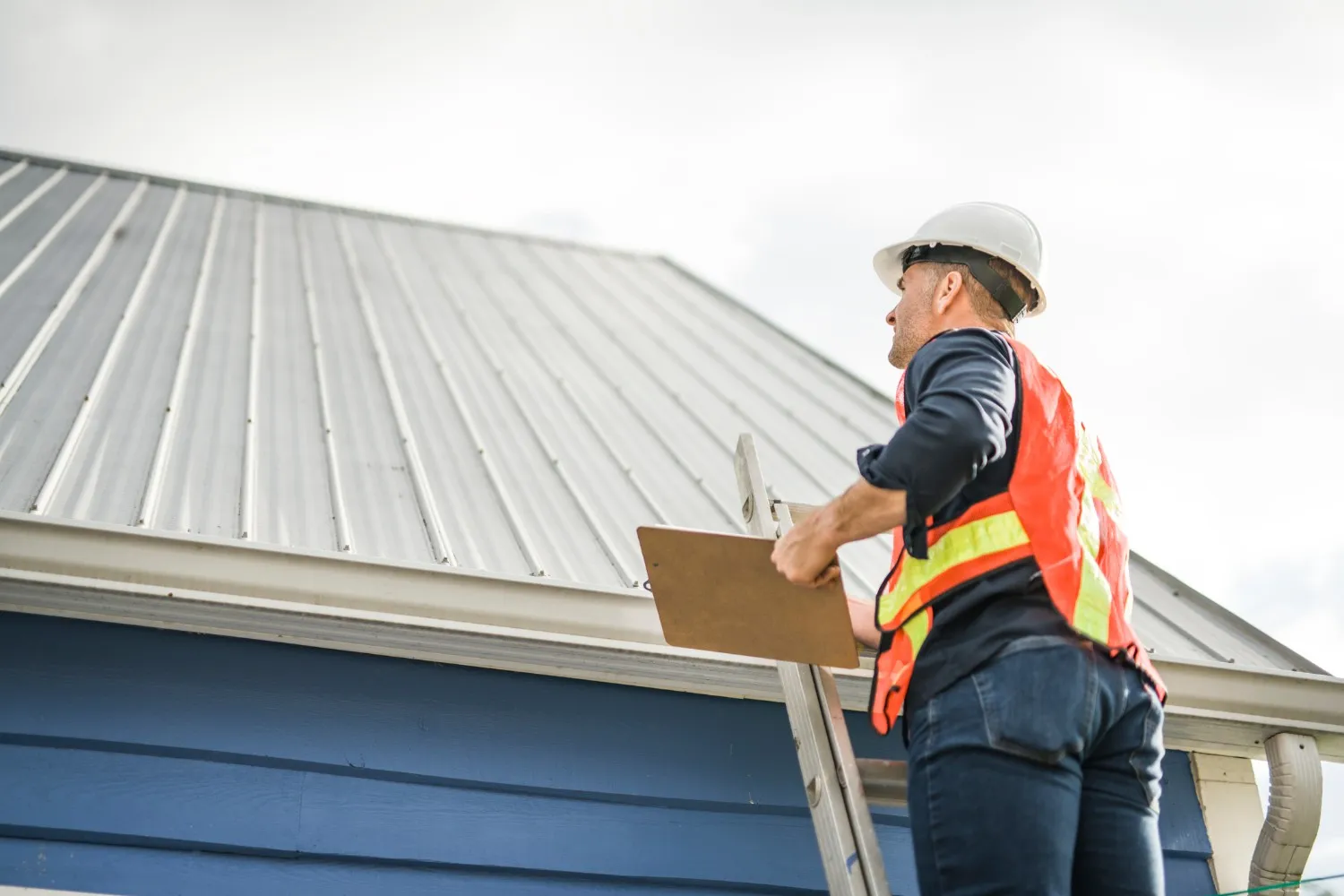
The Inspection Process: Step-by-Step
We utilize a systematic approach to ensure no square foot of your property is overlooked. This standardized process ensures consistency and accuracy, regardless of the building size or roof type.
Initial Site Assessment and Safety Setup:
- Upon arrival, the team assesses site access and establishes safety perimeters in compliance with OSHA standards. This protects your employees and customers while we work.
- We locate all interior leak points reported by your facility management team to correlate them with exterior defects.
Visual Grid Inspection:
- Technicians walk the roof in a grid pattern. This methodical pacing ensures that subtle defects, such as pinholes or hairline cracks in coating systems, are identified.
- We document every deficiency with high-resolution photography, which is later cataloged in your final report.
Moisture Detection:
- Visual inspection is often insufficient for identifying water trapped beneath the membrane. When necessary, we utilize infrared thermography or capacitance meters to detect sub-surface moisture saturation in the insulation.
- Identifying wet insulation is critical because it loses R-value and can degrade the steel or wood deck beneath, leading to expensive structural repairs if left unchecked.
Core Analysis (If Required):
- To determine the composition of the roof assembly (number of layers, type of insulation, type of deck), we may take a core sample.
- This involves cutting a small cross-section of the roof, analyzing the layers, and immediately patching the test area to watertight standards.
Data Compilation and Reporting:
- All data, photos, and notes are compiled into a digital format.
- We classify issues by urgency: Safety Hazards, Active Leaks, Potential Failures, and Cosmetic Issues.
Evaluating Repair vs. Replacement
One of the most difficult decisions a property manager faces is determining when a roof has reached the end of its useful life. An inspection provides the data necessary to make this financial calculation objectively. We help you move away from emotional decisions or guesswork and toward math-based asset management.
Design Roof Services LLC helps you weigh the following factors:
- Saturation Levels: If moisture scans reveal that more than 25% to 30% of the underlying insulation is saturated, replacement is often the more fiscally responsible choice. Trapped water will continue to rot the deck regardless of surface repairs.
- Age and Warranty Status: If the roof is nearing the end of its manufacturer warranty (typically 15 to 20 years) and repair costs are escalating, a new system with a fresh warranty may offer better ROI.
- Leak Frequency: If you are chasing leaks after every rain event, the cost of continuous service calls and internal damage often outweighs the annualized cost of a new roof.
- Energy Efficiency: Older dark-colored roofs absorb heat, increasing cooling costs. switching to a highly reflective "cool roof" system during replacement can significantly lower utility bills, offsetting the capital cost.
Impact of Local Climate on Roofing Systems
The environment in Hobbs, NM, presents specific challenges that dictate how commercial roofs age and fail. Understanding these local factors is essential for accurate inspection and maintenance planning.
Thermal Shock:
- Hobbs sees average summer highs around 93°F, with roof surface temperatures reaching upwards of 160°F. When unexpected summer storms hit, the rapid cooling causes thermal shock.
- This expansion and contraction cycle puts immense stress on seams and flashings. Our inspections focus heavily on seam integrity because this is where thermal movement causes the most damage.
UV Degradation:
- The semi-arid climate and high altitude mean intense UV exposure. Over time, UV radiation breaks down the chemical bonds in roofing membranes, causing them to become brittle and crack.
- We look for "chalking" on single-ply membranes and crazing on asphaltic systems, which are early indicators of UV failure.
Monsoonal Rainfall:
- While the region is generally dry, late summer brings monsoonal moisture patterns that dump large volumes of water in short periods.
- Drainage systems must be perfectly calibrated to handle this surge. An inspection verifies that ponding water evaporates within 48 hours. If water remains longer, it accelerates membrane deterioration and voids most manufacturer warranties.
Differentiating Between Inspections and Maintenance
Many building owners confuse routine maintenance with a formal inspection. While they are related, they serve different purposes. Maintenance is the act of cleaning and minor fixing; inspection is the act of diagnosing and auditing.
Maintenance Tasks:
- Removal of debris (leaves, trash) from drains and gutters.
- Re-caulking termination bars.
- Adding granules to bare spots on modified bitumen.
Inspection Tasks:
- Measuring the remaining thickness of the membrane (mils).
- Testing the adhesion of seams.
- Calculating the remaining service life of the system.
You cannot effectively maintain a roof if you do not know its condition. The inspection provides the roadmap for the maintenance team. Without the audit, maintenance is often reactive, fixing things only after they break, rather than proactive.
Why Third-Party Assessment Matters for Liability
Beyond keeping water out, the condition of your roof carries liability implications. Commercial properties in Hobbs are subject to building codes and insurance requirements. A documented inspection history serves as proof of due diligence.
- Insurance Claims: In the event of storm damage, having a pre-storm inspection report proves the condition of the roof prior to the event. This prevents adjusters from claiming that the damage was due to "pre-existing conditions" or "lack of maintenance."
- Tenant Safety: For leased properties, landlords have a legal obligation to provide a safe environment. A collapsing ceiling tile or a slip hazard caused by a roof leak can lead to lawsuits. Regular inspections mitigate this risk.
- Asset Valuation: If you plan to refinance or sell the building, a certified roof inspection report validates the asset's value. A roof in confirmed good standing protects your asking price during negotiations.
Advanced Diagnostic Technologies
Modern commercial roofing requires modern diagnostics. We move beyond simple visual checks to understand the physics of your building's envelope.
Infrared Thermography:
- This technology detects temperature differences on the roof surface. Wet insulation retains heat longer than dry insulation.
- By scanning the roof at sunset, we can see the "heat signature" of wet areas, allowing for surgical repairs rather than blind guessing.
Drone Surveys:
- For high-rise buildings or roofs with difficult access, aerial drones provide high-definition imagery of the entire perimeter and field.
- This allows for the inspection of hard-to-reach areas, such as the back side of parapets or tall chimney stacks, without risking personnel safety.
When to Schedule Your Inspection
Timing is critical for maximizing the lifespan of your commercial roofing system. We recommend a biannual inspection schedule, typically in the spring and fall.
Spring Inspection:
- The goal is to check for any damage caused by winter freezes or winds. Even in mild winters, temperature fluctuations can loosen metal flashings.
- This prepares the roof for the intense heat and UV exposure of the coming summer.
Fall Inspection:
- This assessment checks for damage caused by summer thermal shock and monsoon rains.
- The focus is on ensuring the roof is watertight and that drains are clear of autumn debris before winter arrives.
Post-Storm Assessment:
- In addition to scheduled visits, an inspection should be triggered immediately following any significant weather event involving hail or high winds (over 50 mph).
- Hail damage is often invisible to the untrained eye but can fracture the fiberglass matting within the membrane, leading to latent leaks months later.
Detailed Reporting for Budget Approval
We understand that facility managers often need to justify expenditures to building owners or CFOs. Our reports are designed to speak the language of finance as well as construction.
- Prioritized Action Items: We separate "Must Do Now" from "Can Wait Until Next Year." This helps you manage cash flow.
- Photographic Evidence: Every recommendation is backed by a photo of the defect. You see exactly what we see.
- Budget Estimates: We provide rough order-of-magnitude costs for the recommended repairs, allowing for accurate fiscal planning.
Secure Your Commercial Asset Today
Neglecting a commercial roof leads to compounded costs, operational downtime, and potential safety hazards. The specific climate conditions in Hobbs require a proactive approach to roof management, combining regular audits with timely maintenance. Whether you manage a warehouse, retail center, or office complex, knowing the true status of your roof is the only way to protect your investment.
Design Roof Services LLC delivers the clarity and technical expertise required to make informed decisions about your property. Stop guessing about leaks and start managing your asset effectively.
Contact us now to schedule your commercial roof inspection and receive a comprehensive report on your building's health.

Customer Testimonials
Go With Experience