



Flat Roof Replacement in Hobbs, NM
Upgrade your property with our professional flat roof replacement in Hobbs, NM. Reliable materials, expert installation, and comprehensive warranties. Contact us to learn more!
Protect Your Property with Reliable Flat Roof Replacement
Dealing with a leaky or aging flat roof in a hot and windy climate like Hobbs, NM, can be stressful for property owners. Ensure your home or business is covered by a reliable, weather-resistant new roof that withstands the elements. Contact us today to schedule a comprehensive roof assessment or to discuss available financing options.
Design Roof Services LLC understands that a failing roof system compromises the structural integrity of your building and ruins internal assets. We provide a solution that focuses on longevity and performance.
- Speedy and meticulous installation, avoiding major disruptions to your daily operations or lifestyle.
- Durable materials suited for Hobbs’ semi-arid climate, ensuring long-term protection against UV rays and thermal shock.
- Comprehensive warranties that guarantee quality and give peace of mind regarding your investment.
All installations are fully licensed, meet local building codes, and come with robust warranties.
Why a Quality Flat Roof Replacement Matters
Flat roofing systems face unique challenges compared to their pitched counterparts, particularly in regions with distinct weather patterns. In the semi-arid environment of Hobbs, roofs are subjected to intense ultraviolet radiation during the summer months, where temperatures frequently exceed 90°F. This constant exposure accelerates the degradation of older roofing materials, causing them to become brittle, crack, and eventually fail. A quality replacement is not merely about stopping a current leak; it is about installing a system capable of reflecting heat and expanding or contracting without tearing.
Water management is the second critical factor. Unlike sloped roofs that rely on gravity for rapid drainage, flat roofs must be precisely tapered to prevent ponding water. Standing water that remains on a roof for more than 48 hours can degrade the membrane, compress insulation, and add excessive weight to the building structure. A professional replacement corrects these drainage issues through the installation of tapered insulation systems, ensuring water flows efficiently to scuppers and drains.
Energy efficiency also plays a significant role in the decision to replace. Modern single-ply membranes, such as TPO (Thermoplastic Polyolefin) and PVC, are designed with high reflectivity. By reflecting solar energy away from the building rather than absorbing it, these materials significantly reduce the cooling load on HVAC systems. For property owners in New Mexico, this translates to lower monthly utility bills and a more comfortable interior environment, making the replacement an investment with tangible returns.
What is Included in Your Roof Replacement?
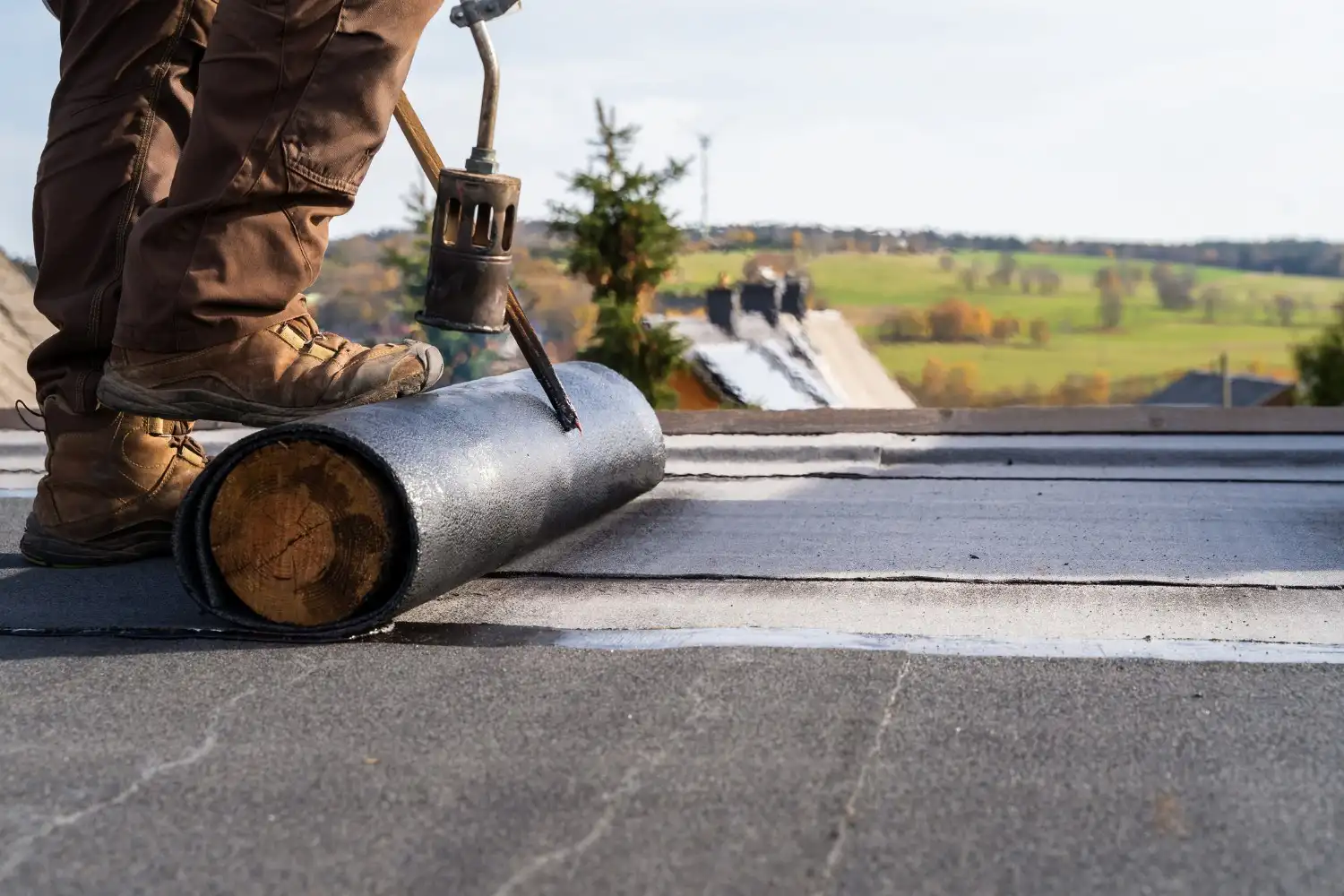
A complete roof replacement is a comprehensive construction project that goes far beyond simply rolling out a new layer of material. To ensure a warranty-backed installation, the scope of work involves addressing the entire roofing assembly, from the deck up.
- Existing Material Removal and Disposal: The process begins with the removal of the old roof system down to the deck. This is critical for identifying any underlying structural rot or damage that would otherwise be hidden. All debris is contained and hauled away to ensure the site remains clean and safe.
- Deck Inspection and Preparation: Once the deck is exposed, it is inspected for structural integrity. Any rusted metal decking or rotted wood is replaced to provide a solid substrate for the new system. The surface is then cleaned and primed to ensure proper adhesion of the new materials.
- Insulation and Tapered Systems: High-R-value ISO (polyisocyanurate) insulation boards are installed to meet or exceed current energy codes. If the existing roof had drainage issues, a tapered insulation system is designed and installed. This creates a subtle slope to direct water toward drainage points, eliminating future ponding issues.
- Membrane Installation: The primary waterproofing layer is installed. Depending on the specific requirements of the building, this may be TPO, EPDM, or Modified Bitumen. The sheets are mechanically attached or fully adhered to the substrate, and the seams are heat-welded or chemically bonded to create a monolithic, watertight barrier.
- Custom Metal Flashing and Edge Details: Perimeter edges and wall flashings are the most vulnerable points on a roof. Custom-fabricated metal edging is installed to secure the membrane and prevent wind uplift. Counter-flashings are applied to masonry walls and curbs to ensure a watertight seal.
- Penetration Sealing: Every pipe, vent, and HVAC unit protruding through the roof is sealed with pre-fabricated boots or liquid-applied flashing. This ensures that the most complex areas of the roof remain leak-free under heavy rain.
Our Roof Replacement Process: What to Expect
Design Roof Services LLC follows a systematic approach to roof replacement to ensure consistency, safety, and adherence to manufacturer specifications. Understanding the sequence of events helps property owners prepare for the project and minimize disruption.
- Site Preparation and Safety Setup: The crew arrives to set up safety perimeters, protecting pedestrians and vehicles from the work zone. Staging areas for materials and dumpsters are established in agreed-upon locations. Tarping is used to protect landscaping and building facades from debris during the tear-off phase.
- Tear-Off and Deck Verification: Technicians remove the existing roof system in manageable sections. This "tear-off as you go" method ensures that the building is never left exposed to the elements overnight. As soon as a section is stripped, the deck is inspected and prepped immediately.
- Insulation and Membrane Application: Insulation layers are secured to the deck using fasteners or adhesive, followed by the rollout of the roofing membrane. In high-wind areas, specific fastening patterns are used to meet wind uplift ratings. Seams are welded using robotic heat welders for consistent, high-strength bonds that are stronger than the sheet itself.
- Detail Work and Flashings: Once the field of the roof is complete, the crew focuses on the details. Flashings around curbs, skylights, and plumbing vents are installed with precision. Pitch pans are filled with non-shrink sealant, and termination bars are secured to vertical surfaces.
- Final Inspection and Cleanup: A senior project manager conducts a final walkthrough. This includes probing seams to ensure weld integrity and verifying that all flashings are tight. Magnetic sweeps are performed around the perimeter to pick up any stray nails or fasteners. Once the site is clear, the final warranty documentation is processed.
Assessing Roof Repair vs Replacement for Your Property
Deciding between repairing a specific leak or replacing the entire roof system is a financial and operational decision. While repairs can extend the life of a roof, there comes a tipping point where replacement becomes the more economical choice.
- Age of the Roof System: Most flat roof systems have a lifespan of 15 to 25 years. If the roof is approaching or has exceeded this age range, the materials are likely brittle and prone to failure. Repairs on an end-of-life roof are often temporary fixes, as the surrounding material will continue to deteriorate.
- Moisture Saturation in Insulation: If a moisture survey reveals that water has penetrated the membrane and saturated the insulation beneath, replacement is necessary. Wet insulation loses its R-value, causes structural deck rot, and cannot be dried out. Trapped moisture can also lead to mold growth inside the building.
- Frequency and Cost of Repairs: When the cost of repairs over a one or two-year period approaches 25% of the cost of a new roof, replacement is generally the smarter investment. Constant "band-aid" repairs on a failing system drain the maintenance budget without solving the underlying problem.
- Membrane Condition: Look for signs of "alligatoring" (cracking that looks like reptile skin), blistering, or open seams. If these issues are widespread across the roof rather than isolated to one area, the system has lost its integrity. In Hobbs, UV damage often manifests as a chalky surface or exposed reinforcement scrim, signaling that the waterproofing layer is gone.
- Renovations and Equipment Upgrades: If significant HVAC upgrades or interior renovations are planned, it is prudent to replace the roof simultaneously. This prevents new equipment from being placed on an old roof that will need replacement shortly, which would require disconnecting and moving the new units.
Understanding Local Building Codes and Climate Considerations
Roofing in Hobbs, NM, requires strict adherence to specific building codes and an understanding of the local climate. Visit our blog for more insights. The region's classification as a semi-arid climate influences both the timing of installation and the materials selected.
- Wind Uplift Requirements: New Mexico experiences high wind events, particularly in the spring. Building codes dictate specific wind uplift ratings (e.g., I-90) that the roof assembly must withstand. This influences the fastener density and the type of edge metal used. Adhering to these codes ensures the roof remains intact during severe storms.
- Thermal Movement: The temperature differential between day and night in the high desert can be extreme. This causes rapid expansion and contraction of roofing materials. Systems installed in this region must possess high elasticity and dimensional stability to withstand this thermal cycling without splitting at the seams.
- Permitting and Inspections: All commercial and residential roof replacements require proper permitting from the local building department. This process ensures that the proposed system meets current energy conservation codes and structural requirements. Inspections are conducted during and after installation to verify compliance.
- Seasonality of Installation: While roofing can be performed year-round, the optimal windows are Spring (March to May) and Fall (September to November). Summer temperatures can affect the curing times of certain adhesives and make conditions difficult for labor. Winter installations are possible but require special care regarding material storage and temperature constraints for adhesives.
Choose Us: Trusted, Licensed Roofing Experts
Selecting a contractor for a flat roof replacement is as important as selecting the material itself. The performance of a TPO or EPDM roof is entirely dependent on the quality of the workmanship, particularly at the seams and penetrations where leaks are most likely to occur.
- Technical Expertise: Our team is trained in the specific application techniques for single-ply and modified bitumen systems. We understand the chemistry of adhesives, the calibration of heat welders, and the geometry of tapered insulation. This technical knowledge ensures a system that performs according to manufacturer specifications.
- Licensed and Insured: Operating without proper licensing or insurance puts the property owner at risk. We maintain all necessary state licenses for roofing work and carry liability and workers' compensation insurance. This protects clients from legal and financial liability in the event of an accident.
- Code Compliance: We are familiar with the specific code requirements for Hobbs and the surrounding areas. From insulation R-values to drainage requirements, every project is designed to pass inspection and meet local standards.
- Safety Protocols: Flat roof work involves specific risks. We utilize strict safety protocols, including fall protection systems, warning lines, and safety monitors. A safe job site protects our crew and minimizes liability for the building owner.
Investing in a new flat roof is a significant decision that impacts the protection and value of your property for decades. Ensure your replacement is handled by professionals who prioritize structural integrity, energy efficiency, and long-term performance.
Secure your property with a professionally installed flat roof today, contact Design Roof Services LLC to request your detailed project estimate.
Low Slope Systems Installed With Structural Accuracy
Expert flat roof replacement in Hobbs, NM ensures your property is fitted with a watertight, efficient roofing system tailored to usage demands. Design Roof Services LLC handles the full process, including removal, prep, installation, and sealing. We follow flat roofing best practices to prevent ponding, leaks, and premature failure. Our team prioritizes material compatibility and load requirements for long-term performance. Complete your replacement with results backed by technical oversight.
Install Flat Systems With Performance Focused Delivery

Customer Testimonials
Go With Experience