



Flat Roof Replacement in Roswell, NM
Facing roof issues in Roswell? Contact us for a professional flat roof replacement. Ensure your property's protection with our secure, warranty-backed solutions. Get your proposal now!
Is Your Flat Roof Ready for Roswell’s Weather?
Facing leaks or damage after the last storm? Roswell’s extreme weather can challenge even the best roofs, leaving your property vulnerable to water intrusion and structural issues. Contact Design Roof Services LLC today to schedule your comprehensive roof assessment and discuss financing options.
A failing flat roof exposes your building to significant risks, ranging from inventory damage to compromised structural integrity. When the membrane cracks or seams separate, immediate action is required to secure the envelope of the building. We specialize in removing compromised roofing systems and installing robust, weather-resistant solutions designed for the local climate.
- Complete roof replacements within 2 days with a focus on minimizing disruption to your daily operations.
- Use of UV and thermal expansion resistant materials specifically chosen to withstand the high desert climate.
- Warranty-backed services ensure peace of mind for years to come.
Licensed, insured, and up-to-date with local building codes for a seamless service experience.
Solve Your Roof Issues with Trust and Quality
Commercial and residential buildings with low-slope roofs require specific attention that differs significantly from standard pitched roofing. The primary challenge in this region is the intense fluctuation in temperature. When a roof heats up under the desert sun, materials expand; when temperatures drop at night or during winter, they contract. Over time, this thermal cycling causes standard materials to crack, split, or pull away from flashings, leading to water entry points. Design Roof Services LLC addresses these specific failure points by utilizing high-performance membranes engineered to maintain elasticity even after years of exposure.
Water ponding is another critical issue addressed during a replacement. Unlike steep-slope roofs where gravity sheds water immediately, flat roofs rely on slight structural slopes or tapered insulation systems to move water toward drains and scuppers. If your current roof holds water for more than 48 hours after rain, the structure is at risk of accelerated degradation. Replacing the system offers the opportunity to correct these drainage issues. We install tapered insulation systems that mechanically force water off the roof, preventing the standing water that leads to leaks and premature material breakdown.
We also focus on energy efficiency during the replacement process. Older built-up roofing (BUR) or dark-colored modified bitumen absorbs a tremendous amount of heat, transferring that thermal load into the building below. By switching to modern, reflective single-ply membranes, you can significantly reduce the cooling load on your HVAC system. This results in a building that is not only watertight but also more cost-effective to operate throughout the hot summer months.
What to Expect from Your Roof Replacement
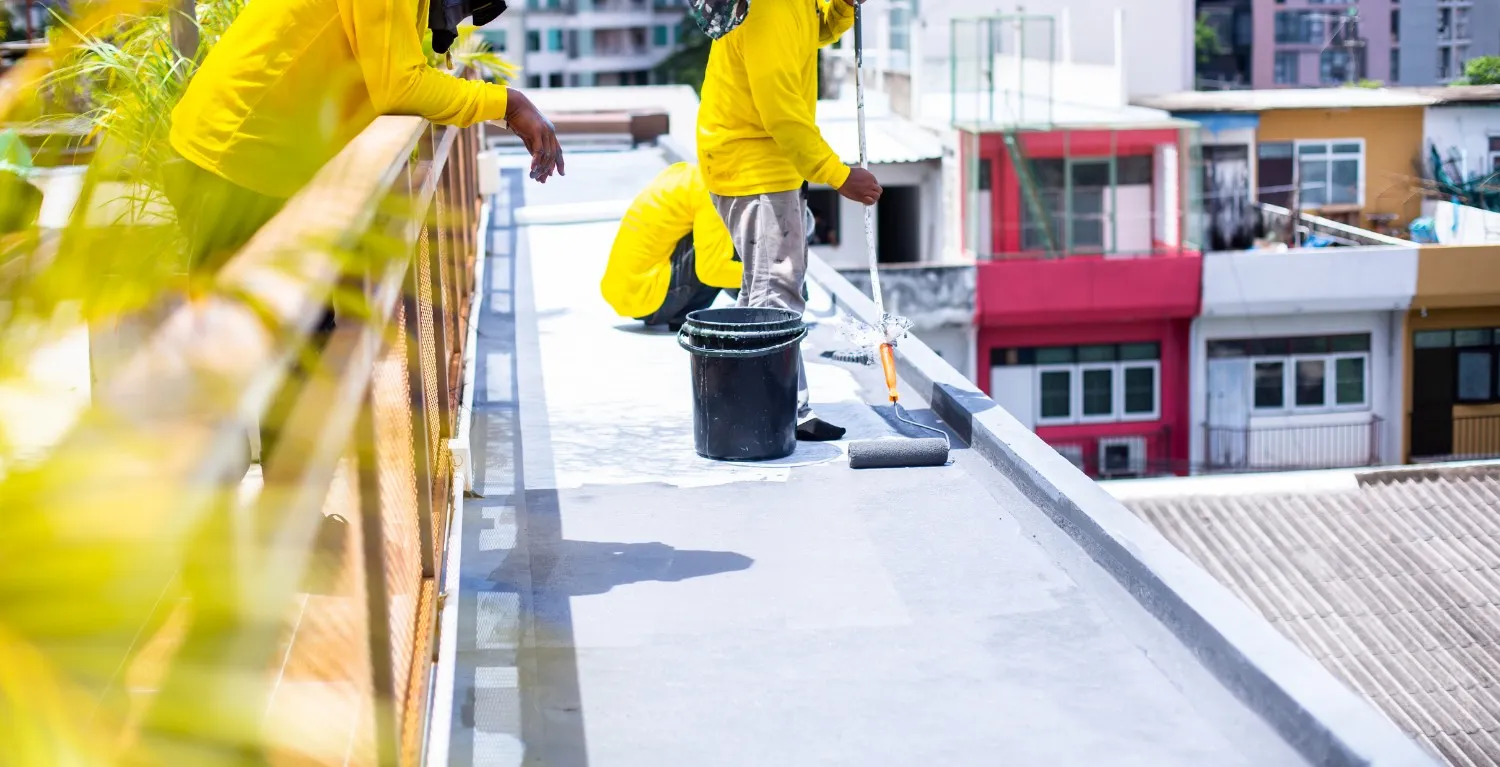
A full roof replacement is a significant construction project, but professional planning ensures the process remains streamlined and predictable. We prioritize transparency regarding scope, materials, and timelines so you understand exactly what is happening at your property. The goal is to restore the integrity of the building with minimal interference to your tenants or business operations.
- Scope of Work: The project typically begins with the removal of the existing roofing system down to the deck. This is necessary to identify and repair any underlying structural damage, such as rusted metal decking or rotted wood. Overlaying a new roof over a wet substrate traps moisture and voids most manufacturer warranties, which is why a complete tear-off is often the recommended path for long-term reliability.
- Material Delivery and Staging: All materials, including insulation boards, membrane rolls, and fasteners, are delivered to the site and loaded onto the roof using cranes or conveyors. This staging is done strategically to spread the weight load safely across the structure. We coordinate this phase to ensure safety zones are established around the building perimeter.
- Timeline and Daily Schedule: Most flat roof replacements are completed efficiently. Crews typically arrive early to maximize daylight hours. We work in sections, ensuring that any area opened up during the day is fully watertight before the crew leaves for the night. This phased approach guarantees that your property remains protected from sudden weather changes throughout the duration of the project.
- Noise and Safety Protocols: Construction inevitably generates noise. We advise on the timing of the loudest activities, such as mechanical removal of the old roof, so you can plan accordingly. Safety is paramount; we install warning lines, perimeter flags, and utilize safety monitors to comply with OSHA standards, ensuring the safety of both our crew and the building’s occupants.
Our Roof Replacement Process: Step-by-Step
Understanding the mechanics of a flat roof installation helps property owners appreciate the complexity and precision involved. We follow a rigorous protocol to ensure every layer of the roof system contributes to the building's protection.
- Initial Site Preparation: The process begins with securing the perimeter. Tarps and plywood protection are placed over sensitive landscaping, AC units, and ground-level fixtures. Dumpsters are positioned for debris removal to keep the site clean.
- Demolition and Tear-Off: Crews mechanically remove the old roofing membrane, insulation, and flashings. This debris is immediately funneled into waste containers to prevent clutter.
- Deck Inspection and Repair: Once the deck is exposed, it is inspected for defects. Any rotted wood, corroded steel, or spalled concrete is repaired or replaced. This step is critical; a new roof cannot perform well on a compromised foundation.
- Installing Insulation: New insulation boards are mechanically fastened or adhered to the deck. In many cases, Polyiso (polyisocyanurate) insulation is used for its high R-value. If drainage correction is needed, tapered insulation panels are installed at this stage to create a positive slope toward drains.
- Laying the Membrane: The waterproof membrane, whether TPO, EPDM, or PVC, is rolled out over the insulation. Depending on the system specification, this is either mechanically fastened with plates and screws or fully adhered using industrial-grade bonding adhesive.
- Seaming: This is the most critical step for watertightness. For TPO and PVC roofs, a robotic heat welder fuses the seams together at temperatures exceeding 1,000 degrees Fahrenheit, turning multiple sheets into a monolithic surface. For EPDM, primer and seam tape create a chemical bond.
- Flashings and Detailing: Special attention is paid to penetrations such as HVAC curbs, plumbing vents, and skylights. Pre-fabricated boots and custom field flashing are installed to seal these vulnerable areas. Termination bars are installed at the parapet walls to secure the membrane edges.
- Final Inspection and Cleanup: The crew conducts a thorough walkthrough, probing seams and checking flashings. Magnetic sweeps are performed on the ground to remove any loose nails or fasteners.
Determining the Need: Replace vs. Repair Your Roof
Deciding between a repair and a full replacement is a financial and operational decision. While repairs can extend the life of a roof, there comes a tipping point where replacement becomes the more economical and logical choice.
- Age of the Roofing System: Most flat roof systems have a lifespan between 15 and 25 years. If your roof is approaching or has exceeded its expected service life, the materials are likely brittle and prone to failure. Continuing to repair a roof at the end of its lifecycle often results in throwing money at a depreciating asset.
- Saturation of Insulation: If moisture surveys or core cuts reveal that the insulation beneath the membrane is saturated, replacement is necessary. Wet insulation loses its thermal resistance (R-value) and causes the fasteners and deck to rust or rot. You cannot simply patch over wet insulation; it must be removed.
- Frequency of Leaks: If you find yourself calling for leak repairs after every significant rain event, the system has likely failed. "Chasing leaks" is a sign that the membrane has widespread issues, such as alligatoring (cracking) or seam failure, which cannot be solved by spot repairs.
- Energy Costs: A sudden spike in heating or cooling costs can indicate that your roof insulation has failed or that the reflective properties of the roof surface have diminished. Replacing the roof with modern, energy-efficient materials can provide ROI through utility savings.
- Visual Indicators: Look for extensive blistering, where air is trapped between layers, or serious alligatoring on asphalt-based roofs. On single-ply roofs, look for "scrim exposure," where the mesh reinforcement inside the membrane becomes visible due to weathering. These are terminal signs for a roof system.
Design Roof Services LLC assists in this decision-making process by providing data-backed assessments. We outline the costs of continued repairs versus the investment of replacement, helping you make the choice that benefits your bottom line.
Adhering to Roswell's Unique Building Requirements
Every region has specific building codes and environmental factors that dictate how a roof must be installed. In Roswell, the combination of high heat, wind, and occasional winter precipitation creates a unique set of demands.
- Thermal Expansion and Contraction: The temperature swing in the high desert is substantial. Roof systems must be installed with expansion in mind. We utilize installation techniques that allow the membrane to move without tearing or stressing the attachment points.
- Wind Uplift Ratings: Strong seasonal winds require roofs to meet specific uplift ratings. This influences the fastening pattern of the insulation and the membrane. We ensure that the number of fasteners per square foot meets or exceeds code requirements to prevent the roof from billowing or peeling off during a windstorm.
- Permitting and Inspections: Local municipal codes require proper permitting for re-roofing projects. This ensures that the work complies with current safety and energy standards. We handle the administrative burden of pulling permits and scheduling required city inspections, ensuring the project is legally compliant and documented.
- Drainage Codes: Local codes prohibit water from draining onto neighboring properties or creating public hazards. We ensure that scuppers, gutters, and downspouts are sized correctly and positioned to direct water away from the building foundation and public walkways in compliance with local regulations.
Why Choose Us? Customer Stories & Service Guarantees
Selecting a contractor for a flat roof replacement is about finding a partner who values durability and accountability. We differentiate ourselves through rigorous quality control and a commitment to using only top-tier materials.
- Manufacturer Certifications: We work with leading roofing manufacturers, which allows us to offer No-Dollar-Limit (NDL) warranties. These warranties cover both labor and materials for a specified period, offering superior protection compared to standard material-only warranties.
- Licensed and Insured: Operating without proper insurance puts the property owner at risk. We carry full liability and workers' compensation insurance to protect you from any liability during the construction process.
- Detailed Project Management: From the initial estimate to the final handshake, you will have a clear line of communication. We do not believe in hidden fees or surprise change orders. Any unforeseen structural issues discovered during the tear-off are documented photographically and discussed immediately before proceeding.
- Site Cleanliness: We respect your property. Our crews are trained to maintain a tidy workspace, ensuring that debris does not impact your landscaping or parking areas. We perform a final magnetic sweep to ensure the safety of vehicles and pedestrians.
Your commercial property deserves a roof that performs under pressure. Do not wait for a catastrophic failure to address aging infrastructure. Design Roof Services LLC is ready to provide the expertise and labor necessary to secure your building against the elements.
Secure your investment with a professional roof replacement. Contact us today to request a detailed proposal and timeline.
Flat Roof Projects Delivered With Technical Accuracy
Expert flat roof replacement in Roswell, NM, ensures your property receives a watertight system suited for high-use commercial spaces. Design Roof Services LLC manages every phase from tear-off to installation using approved materials and structured planning. We eliminate common issues like ponding and separation through correct slope design and sealing. Each replacement is executed with accountability and efficiency. Upgrade flat systems with methods that reduce long-term issues.
Complete Flat Roofing Projects With Functional Results

Customer Testimonials
Go With Experience