



Metal Roof Replacement in Loving, NM
Upgrade to a durable, energy-efficient metal roof in Loving, NM. Schedule a comprehensive roof assessment or explore financing options with us today.
Is Your Roof Ready for the Searing Summer Sun?
Metal roofs need to withstand the harsh climate found in places like Loving, NM, from blazing summer heat to chilly winter nights. If you are noticing leaks, rust, or visible wear, it is time to secure your home with a durable, energy-efficient upgrade. Contact us today to schedule your comprehensive roof assessment or discuss our financing options.
- Increased home value and energy efficiency with modern metal roofing materials.
- Expert installation within days to protect your home sooner.
- Long-term savings with low maintenance and utility rebates.
Compliant with NM codes, all installations come with a comprehensive warranty and flexible financing options.
When living in a semi-arid environment, the thermal shock of hot days dropping into near-freezing nights wreaks havoc on traditional roofing materials. Asphalt shingles often crack and curl under intense UV exposure, leading to premature failure. Design Roof Services LLC specializes in transitioning homes to high-performance metal systems designed to handle these exact conditions. A metal roof is not just a cosmetic update; it is a structural fortification against the elements.
Why Metal Roofing Suits the Local Climate
The environment in Loving involves specific challenges that make metal an ideal material choice. Traditional roofing materials often degrade quickly here due to the combination of intense ultraviolet radiation and the thermal expansion and contraction caused by temperature swings. Metal roofing offers a distinct advantage because it reflects a significant portion of the sun's radiant heat, rather than absorbing it. This reflectivity keeps the attic space cooler, reducing the burden on air conditioning systems during those 90°F+ summer days.
Beyond heat resistance, the region experiences localized summer thunderstorms that bring sudden, heavy precipitation and wind. Metal panels, when properly fastened, possess varying wind uplift ratings that far exceed those of standard shingles. They are engineered to shed water rapidly, preventing moisture accumulation that leads to rot or mold.
Durability factors include:
- UV Resistance: High-quality paint finishes, such as Kynar 500 or Hylar 5000, resist chalking and fading, maintaining the roof's integrity and appearance for decades.
- Fire Safety: Metal is a non-combustible material (Class A fire rating), providing critical protection in dry, arid climates where fire risks can be elevated.
- Impact Resistance: Many metal roofing products are rated Class 4 for impact resistance, offering superior protection against hail or debris carried by strong winds.
What You Get Today: Quick Install, Guaranteed Quality
Choosing a metal roof replacement is a significant investment in the longevity of the property. The current market offers a variety of metal gauges and profiles, allowing homeowners to balance aesthetic preferences with structural requirements. Whether opting for a standing seam system, which conceals fasteners for a sleek look and higher watertight integrity, or a screw-down corrugated panel for a more traditional aesthetic, the focus remains on quality installation.
A professional installation includes more than just the visible metal panels. It involves a complete roofing system. This system comprises the deck protection, high-temperature underlayment specifically designed for metal, and proper ventilation components.
Key inclusions in a modern metal roof system:
- High-Temp Underlayment: Unlike standard felt, this self-adhering membrane withstands the high heat generated under metal panels without drying out or becoming brittle.
- Custom Flashing: Flashings are custom-bent to fit the specific angles of the roof, ensuring that chimneys, valleys, and wall intersections are completely watertight.
- Ventilation Upgrades: Proper ridge vents and soffit intake allow heat to escape the attic, preventing condensation buildup that can corrode the underside of the panels.
How Metal Roof Replacement Works: Our Step-by-Step Process
A systematic approach ensures that the roof replacement process is efficient and minimizes disruption to the household. Understanding the sequence of events helps homeowners prepare for the project.
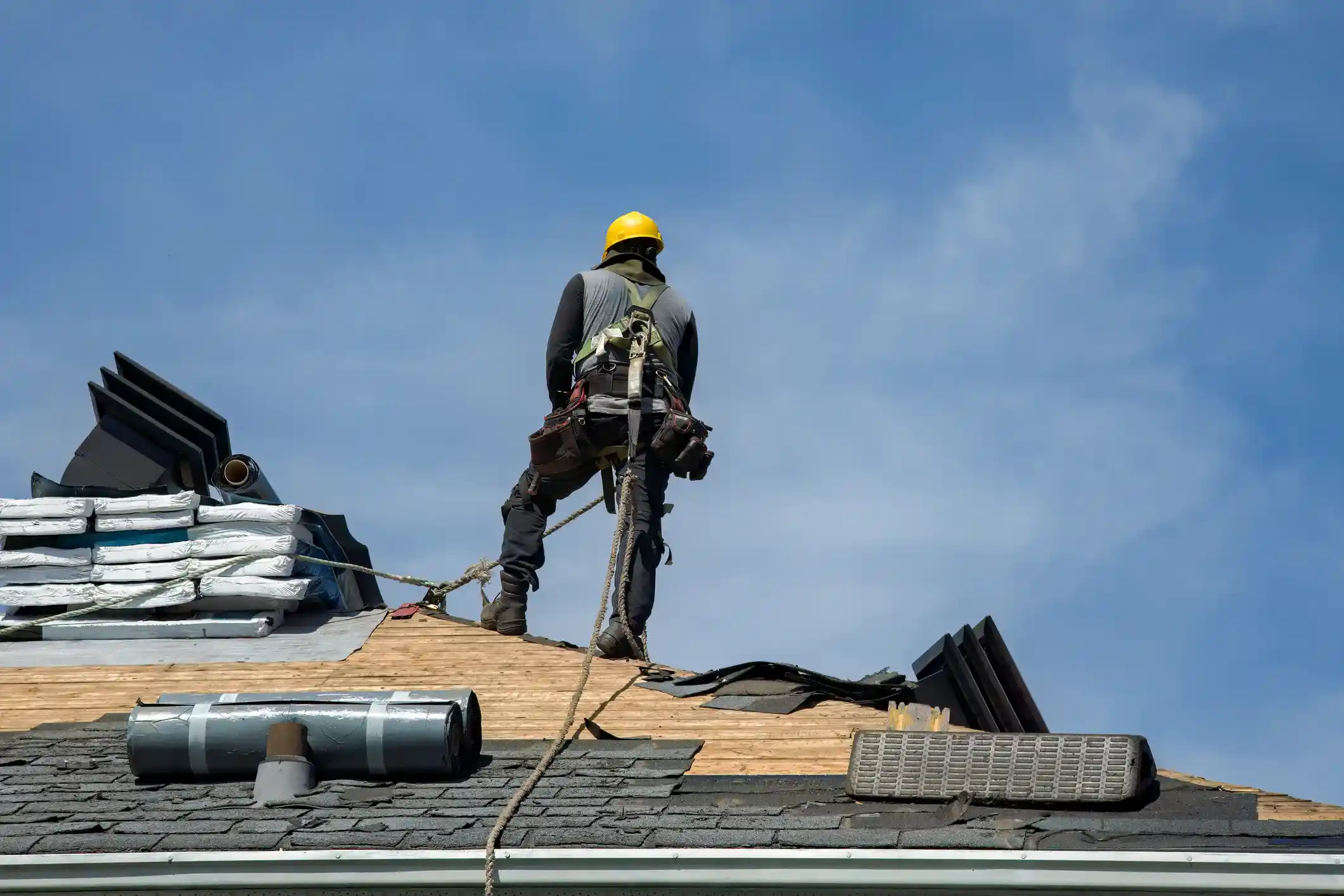
- Site Preparation and Protection: The process begins with securing the perimeter of the home. Tarps and plywood are placed to protect landscaping, driveways, and outdoor furniture from falling debris. A dumpster is typically positioned for waste disposal.
- Tear-Off and Deck Inspection: Removing the old roofing material is critical to inspecting the structural decking underneath. While metal can sometimes be installed over existing shingles, a complete tear-off allows for the identification and repair of rotted wood or structural deficiencies. This step ensures the new roof has a solid foundation.
- Underlayment Installation: Once the deck is clean and repaired, a layer of high-performance, ice-and-water shield is applied to the eaves, valleys, and penetrations. This is followed by a synthetic underlayment across the entire roof surface, acting as a secondary water barrier.
- Drip Edge and Trim Installation: Metal drip edges are installed along the eaves and rakes. This component directs water away from the fascia and into the gutters, preventing water from wicking back under the roof edge.
- Panel Installation: The metal panels are installed starting from the eaves and working up toward the ridge. For standing seam roofs, panels are secured with concealed clips that allow for thermal expansion. For exposed fastener roofs, screws with neoprene washers are placed in strategic patterns to ensure wind resistance and watertight seals.
- Flashing and Ridge Cap Assembly: Flashings are installed around plumbing vents, chimneys, and skylights. Finally, the ridge cap is installed to seal the peak of the roof while allowing for necessary airflow if a ridge vent system is utilized.
- Final Inspection and Cleanup: A magnetic sweep of the yard is conducted to collect any stray nails or metal shavings. The roof undergoes a rigorous final inspection to ensure all fasteners are seated correctly and flashings are sealed.
When to Choose Replacement Over Repair
Deciding between repairing a section of the roof or opting for a full replacement depends on several variables. While repairs can extend the life of a roof for a few years, they are often stop-gap measures. In the climate of Loving, where roofs are subjected to extreme conditions, patching an already failing system can lead to chasing leaks from one area to another.
Factors suggesting replacement is necessary:
- Widespread Corrosion: If rust is visible across multiple panels or if the finish has completely deteriorated, the metal has lost its protective coating and will soon fail.
- Fastener Failure: On older screw-down roofs, the neoprene washers eventually dry rot and crack. If thousands of screws need replacing and the holes are widened due to movement, a new roof is often more cost-effective.
- Storm Damage: Significant hail damage or wind uplift that compromises the seams usually warrants a full replacement to restore the structural warranty.
- Age of the Roof: If the roof is nearing the end of its expected lifespan (typically 20-25 years for asphalt, longer for metal), investing in repairs yields diminishing returns.
Adhering to New Mexico's Roofing Codes and Standards
Compliance with local building codes is non-negotiable. New Mexico adopts the International Residential Code (IRC), but local jurisdictions often have specific amendments regarding wind loads and insulation. Ensuring the project meets these standards protects the homeowner from future liability and ensures the roof performs as intended.
Design Roof Services LLC ensures that every project meets specific criteria regarding load-bearing capacity and wind resistance. This is particularly important for metal roofing, as improper spacing of fasteners or clips can lead to panel uplift during high winds.
Key code considerations include:
- Wind Uplift Ratings: The roofing assembly must be tested and rated to withstand the wind speeds common in the area. This dictates the fastening schedule and edge detailing.
- Energy Code Compliance: Modern codes often require specific insulation levels. When replacing a roof, it is the ideal time to verify if the attic insulation meets current R-value requirements for energy conservation.
- Permitting and Inspections: All replacement projects require proper permitting. This process involves a mid-roof inspection (deck nailing) and a final inspection by a city or county official to verify compliance.
Navigating Insurance and Financing for Your New Roof
A metal roof is a substantial capital improvement. Many homeowners in the area utilize financing options or insurance proceeds to fund the project. If the replacement is due to storm damage, the process involves navigating the insurance claim to ensure all legitimate damages are covered.
- Insurance Claims Assistance: Detailed documentation of damage is required for insurance claims. This includes photos of hail hits on soft metals (vents, flashing) and the roof surface itself. A professional assessment helps distinguish between cosmetic damage and functional damage that warrants a payout.
- Financing Options: For those upgrading purely for longevity or aesthetic reasons, flexible financing plans allow homeowners to break the cost into manageable monthly payments. This makes the upfront cost of premium metal roofing more accessible, allowing homeowners to enjoy the benefits of energy savings immediately.
Local Considerations for Metal Roofing
When selecting a metal roof in this region, specific local factors influence the design and material choices. The goal is to maximize the roof's performance while ensuring it complements the local architecture.
- Solar Compatibility: With abundant sunlight, many homeowners consider solar panel installation. Metal roofs, particularly standing seam systems, are the best platform for solar. Solar arrays can be clamped directly to the seams without penetrating the roof deck, eliminating potential leak points associated with solar installations on asphalt shingles.
- Noise Mitigation: A common concern is the noise of rain on a metal roof. However, with solid decking and proper insulation, the noise level is comparable to other roofing materials. The attic insulation and underlayment dampen the sound, preventing the "barn effect."
- Aesthetics and HOA Rules: Metal roofing comes in various styles that mimic slate, tile, or wood shake. It is important to select a color and profile that aligns with neighborhood aesthetics and any Homeowners Association (HOA) guidelines that may apply. Lighter colors are often recommended for their thermal reflectivity.
Securing Your Home Investment
A metal roof replacement offers a definitive solution to the roofing challenges posed by the New Mexico climate. It transforms a recurring maintenance headache into a long-term asset that improves energy efficiency, enhances curb appeal, and provides superior protection against the elements. By selecting the right materials and ensuring professional execution, homeowners secure a defense system that lasts for decades.
Design Roof Services LLC provides the expertise required to execute these complex installations with precision. From the initial tear-off to the final trim work, every step is managed to ensure durability and code compliance.
Ready to upgrade to a roof that lasts? Contact us today to discuss your metal roofing options and secure your installation.

Customer Testimonials
Go With Experience