



Metal Roof Replacement in Lovington, NM
Discover the benefits of metal roof replacement in Lovington to combat harsh climates. Explore our efficient installation services and secure your home's future. Call us today!
Is Your Roof Ready to Face Lovington's Harsh Climate?
Facing frequent leaks or high energy bills due to an outdated or damaged roof? A metal roof replacement might be your long-term solution to withstand Lovington’s intense heat and sporadic heavy rains. Contact us today to schedule a detailed roof assessment or inquire about our available financing options.
- Enhance your home's energy efficiency with modern metal roofing.
- Get a roof that lasts, with materials suited to handle temperature extremes.
- Enjoy peace of mind with comprehensive warranties and expert installation.
Secure a hassle-free experience with full permitting support and flexible financing options.
The semi-arid environment of New Mexico places immense stress on standard asphalt shingles. UV radiation degrades adhesives, and rapid temperature swings can cause materials to crack and blister. Design Roof Services LLC provides specialized metal roof replacement services engineered to address these specific regional challenges. By transitioning to a high-performance metal system, homeowners in Lovington can secure a protective barrier that not only repels water during summer thunderstorms but also reflects solar heat, significantly reducing cooling loads during the peak of summer.
Comprehensive Metal Roofing Systems for Durability
Replacing a roof is a significant construction project that involves more than simply nailing down new panels. A complete metal roof replacement changes the thermal and structural dynamics of your home. The focus is on installing a cohesive system that manages water runoff, ventilation, and insulation effectively.
When you invest in a metal roof replacement, you are purchasing a system designed for longevity. The core components of this system include high-grade metal panels, which are typically available in steel, aluminum, or galvalume. These materials are chosen based on their ability to resist corrosion and hold paint finishes despite constant sun exposure.
Included in a professional replacement is the removal of the existing roofing material. While some contractors may suggest layering metal over shingles, a complete tear-off is often necessary to inspect the decking for rot or structural damage. This ensures the new roof has a solid foundation. Once the deck is prepared, a high-temperature synthetic underlayment is installed. This layer provides a secondary moisture barrier and is critical in metal roofing applications because metal heats up significantly; standard felt paper often dries out and becomes brittle under metal panels.
Ventilation upgrades are also a standard part of the scope. Metal roofs require adequate intake and exhaust airflow to prevent heat buildup in the attic, which can lead to condensation issues. Ridge vents specifically designed for metal profiles are installed to ensure the home breathes correctly. Finally, the trim package, including drip edges, rake trim, and valley flashing, is custom-fabricated to seal the perimeter and vulnerable joints against wind-driven rain.
The Metal Roof Installation Process
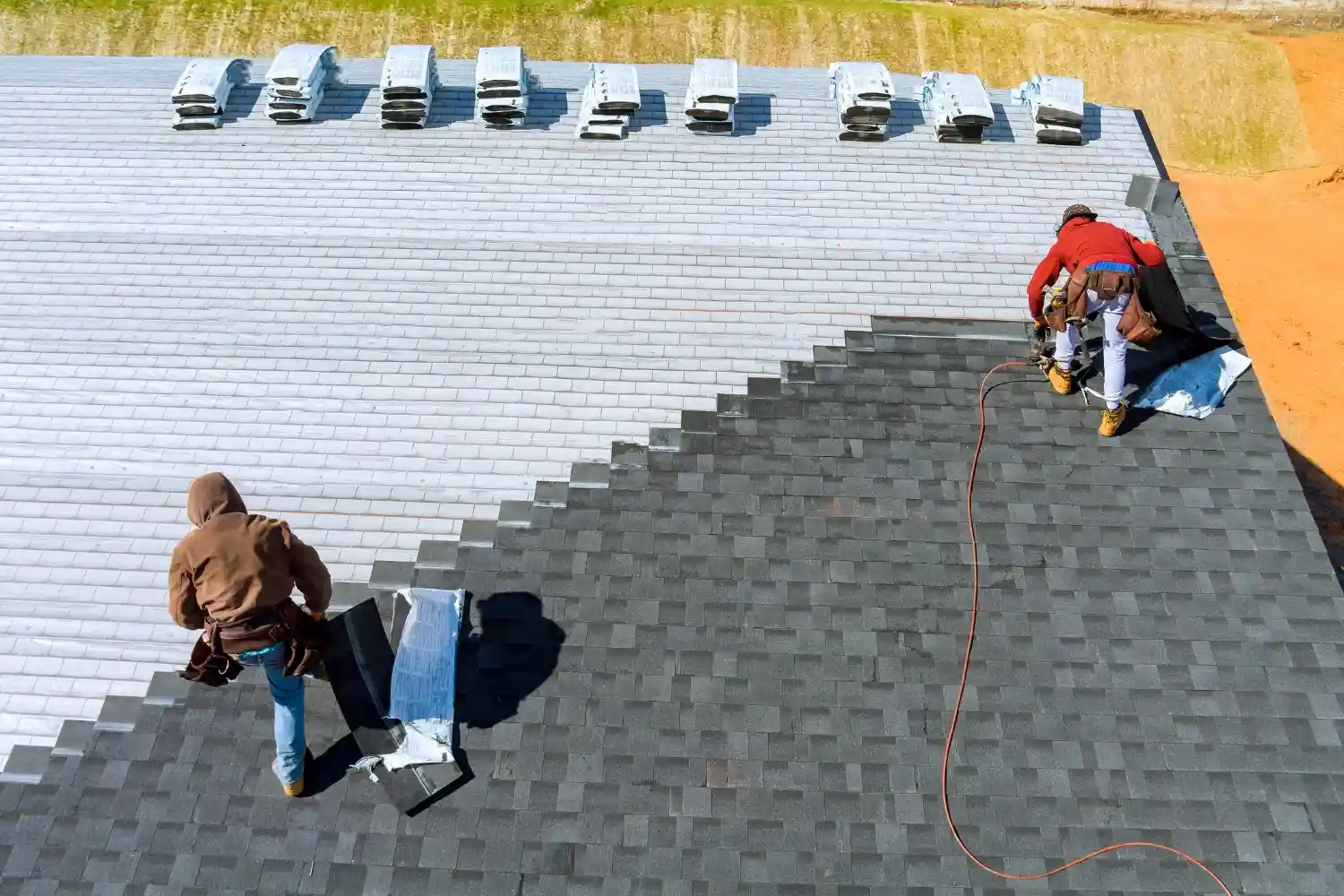
The installation of a metal roof requires precision and adherence to manufacturer specifications to ensure the warranty remains valid. Unlike shingles, which rely on gravity and overlapping, metal roofing relies on mechanical interlocks and specialized fasteners. The process is methodical and follows a strict sequence to ensure water-tightness.
Site Preparation and Tear-Off
- The crew arrives to protect the perimeter of the house, covering landscaping and setting up dumpsters for debris.
- Old roofing materials, including shingles, felt, and old flashing, are removed down to the wood deck.
- Inspectors check the plywood or OSB decking for soft spots, water damage, or rot. Any compromised wood is replaced to ensure a screw-holding surface.
Dry-In and Underlayment Application
- Synthetic underlayment is rolled out and fastened to the deck. This material is slip-resistant for worker safety and heat-resistant to withstand the high temperatures generated by the metal panels.
- Ice and water shield membranes are applied to eaves, valleys, and penetrations (like vent pipes and chimneys). This self-sealing membrane prevents water intrusion in the most vulnerable areas of the roof.
Panel Layout and Installation
- The installation team snaps chalk lines to ensure panels remain square and straight during installation.
- Panels are cut to length, often on-site, to minimize waste and ensure a custom fit for the specific roof dimensions.
- Fasteners are installed according to a specific pattern. For exposed fastener systems, screws with neoprene washers are driven through the face of the panel. For standing seam systems, clips are attached to the deck, and the panels are snapped or mechanically seamed over the clips, hiding the fasteners.
Flashing and Trim Work
- Valley flashing is installed before the main panels in those areas to channel water safely off the roof.
- Sidewall and headwall flashing are installed where the roof meets vertical walls, often requiring counter-flashing cut into the masonry or siding for a permanent seal.
- Ridge caps are installed last, sealing the peak of the roof while allowing for ventilation.
Final Inspection and Cleanup
- A magnetic sweep of the yard and driveway is conducted to pick up any stray screws or metal shavings.
- The roof is inspected to ensure all fasteners are seated correctly (not under-driven or over-driven) and that no scratches occurred during installation.
- Sealants are applied to plumbing boots and exposed nail heads on flashing.
Knowing When to Replace vs. Repair Your Roof
Deciding between a repair and a full replacement is a critical financial decision. While repairs can extend the life of a roof for a few years, there comes a point where the structural integrity of the system is compromised, and replacement becomes the more economical choice. In the climate of Lovington, specific signs indicate that a metal replacement is necessary.
Consider replacement if the current roof has widespread rust or corrosion. While surface rust can sometimes be treated, rust that has penetrated the substrate indicates the protective coating has failed completely. If the metal panels are thinning or showing holes, a coating system will not provide a long-term solution.
Another indicator is the condition of the fasteners. On older metal roofs, screws may back out due to thermal expansion and contraction cycles. If the holes have become elongated or the washers have disintegrated, simply retightening the screws will not stop leaks. If this issue is systemic across the entire roof, replacement with a new system, potentially a standing seam system that accommodates thermal movement, is required.
Storm damage is a frequent trigger for replacement. If a roof has sustained significant hail damage, it can compromise the finish and dent the metal, leading to potential pooling water or accelerated corrosion. Insurance adjusters often total a roof if the density of hits per square foot exceeds a certain threshold. In these cases, full replacement is the only way to restore the property's value and warranty coverage.
Finally, consider the energy performance of the home. Older roofs often lack proper ventilation or reflective properties. If cooling bills are escalating, replacing the roof with a "cool metal" product that has high solar reflectance can offer a return on investment through monthly energy savings.
Navigating Local Roofing Requirements
Roofing projects in Lovington and the surrounding Lea County area must adhere to specific building codes and regulations. These codes are in place to ensure safety and durability against local weather patterns. A professional replacement project handles the administrative burden of these requirements on behalf of the homeowner.
Building Permits and Inspections
- Most roof replacements require a building permit from the local municipality. This process ensures that the planned materials and methods meet current safety standards.
- Inspections may be required at the mid-point (deck nailing) and upon completion to verify that the roof is installed to code.
Wind Resistance Standards
- The open plains surrounding Lovington allow for high wind speeds, particularly during spring storms. Roofing materials must be rated for specific wind uplift pressures.
- Installation patterns for fasteners are often denser at the corners and perimeter of the roof, as these areas experience the highest wind uplift forces.
Thermal Expansion Management
- The desert climate involves significant temperature swings between day and night. Metal panels expand when hot and contract when cold.
- Proper installation requires allowing for this movement. Using fixed screws on long panels without expansion allowances can cause the fasteners to shear or the holes to wallow out. Standing seam roofs use floating clips to handle this movement effectively.
Seasonality and Scheduling
- While roofing can technically be performed year-round in New Mexico, the extreme heat of summer requires adjustments to the work schedule, often starting very early in the morning to avoid the peak heat of the day.
- Sudden thunderstorms in late summer require crews to be vigilant about drying in the roof immediately after tear-off to prevent water damage to the interior.
Technical Advantages of Modern Metal Roofing
Modern metal roofing offers distinct technical advantages over traditional materials, particularly in arid environments. The metallurgy and coating technologies have advanced significantly, providing homeowners with a product that performs differently than the metal roofs of decades past. Visit our blog for more insights.
- Radiant Heat Blockage: Asphalt shingles absorb heat and transfer it into the attic space. Metal roofing, especially when equipped with Cool Roof technology, reflects a significant portion of solar radiation. Furthermore, metal has low thermal mass, meaning it does not hold heat once the sun goes down, allowing the attic to cool faster in the evening. This reduction in heat transfer directly correlates to a reduced load on air conditioning systems.
- Fire Resistance: In areas prone to dry conditions, fire resistance is a paramount concern. Metal roofing typically carries a Class A fire rating, the highest available. This means the roof is non-combustible and provides a high degree of protection against airborne embers from nearby brush fires or structure fires. This classification can sometimes lead to lower homeowner insurance premiums.
- Weight Considerations: Metal is significantly lighter than tile or slate and is comparable to or lighter than asphalt shingles. This reduced weight puts less stress on the home’s framing and foundation. In older homes where structural settling might be a concern, a lightweight metal roof is an excellent option to reduce the dead load on the structure.
- Water Shedding Capabilities: The profile of metal panels is designed to shed water and debris efficiently. Unlike textured surfaces that can trap dirt and moisture, the smooth surface of metal allows rain to wash away dust accumulation. This is vital in semi-arid climates where dust buildup can hold moisture against the roof surface, eventually leading to deterioration in other materials.
Why Professional Execution is Critical
A metal roof is unforgiving of installation errors. Unlike soft roofing materials that can be easily patched or sealed, metal panels must be installed correctly the first time. The alignment of the panels determines the aesthetic and functional success of the project. If the first panel is slightly off-square, the error magnifies across the roof, leading to a "saw-tooth" effect at the eaves or ridge.
Design Roof Services LLC utilizes specialized tools for cutting and bending metal to ensure factory-grade edges. Improper cutting with abrasive blades can overheat the metal, damaging the protective coating and leading to premature rust at the cut edge. Professional shears and nibblers are used to cut panels cleanly without burning the finish.
Furthermore, correct flashing details are the difference between a waterproof roof and a leaky one. The complex geometry of chimneys, skylights, and valleys requires custom-fabricated metal work. Relying on caulk alone is a failure point; professional installation involves overlapping metal components to shed water mechanically, using sealants only as a secondary backup.
Warranties for metal roofing are also tied to contractor certification. Manufacturers often require that the installer be trained in their specific system to offer the full wind and watertight warranty. DIY or handyman installations often void these material warranties, leaving the homeowner without recourse if the product fails.
Securing Your Home Investment
A metal roof replacement is a substantial upgrade that enhances the curb appeal, value, and resilience of a property. It transforms a recurring maintenance headache into a long-term asset. By selecting a system designed for the New Mexico climate, homeowners protect their interiors from water damage and their wallets from excessive energy costs.
When the time comes to make this transition, rely on a team that understands the local environment and the technical intricacies of metal fabrication. Design Roof Services LLC is committed to delivering roofing solutions that stand the test of time and weather.
Ready to secure a durable, energy-efficient future for your home? Get Your Free Estimate Today!

Customer Testimonials
Go With Experience